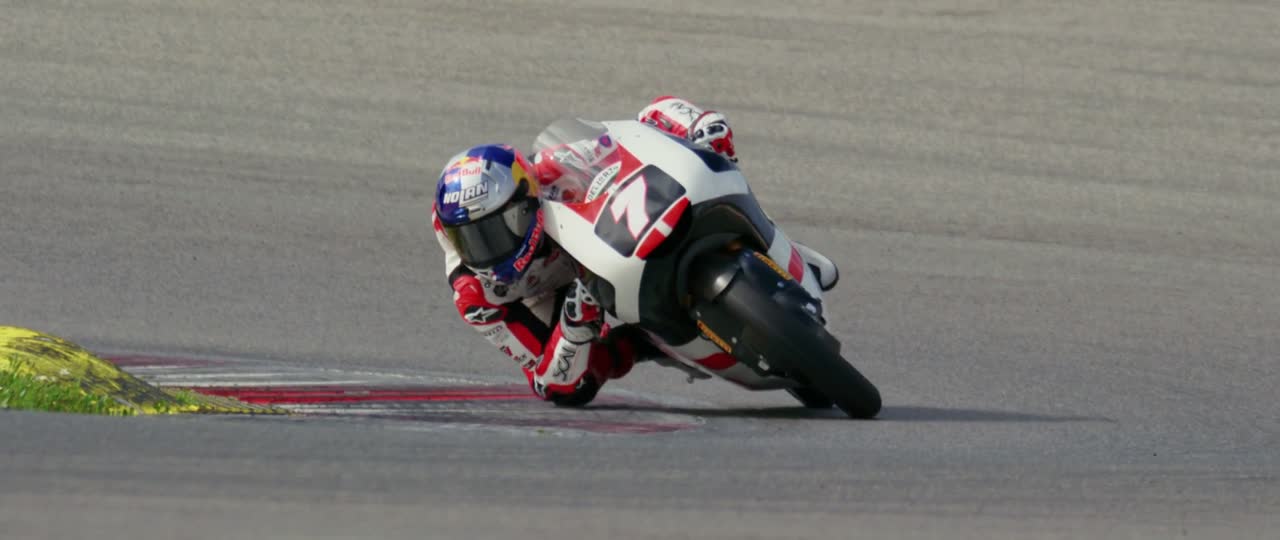
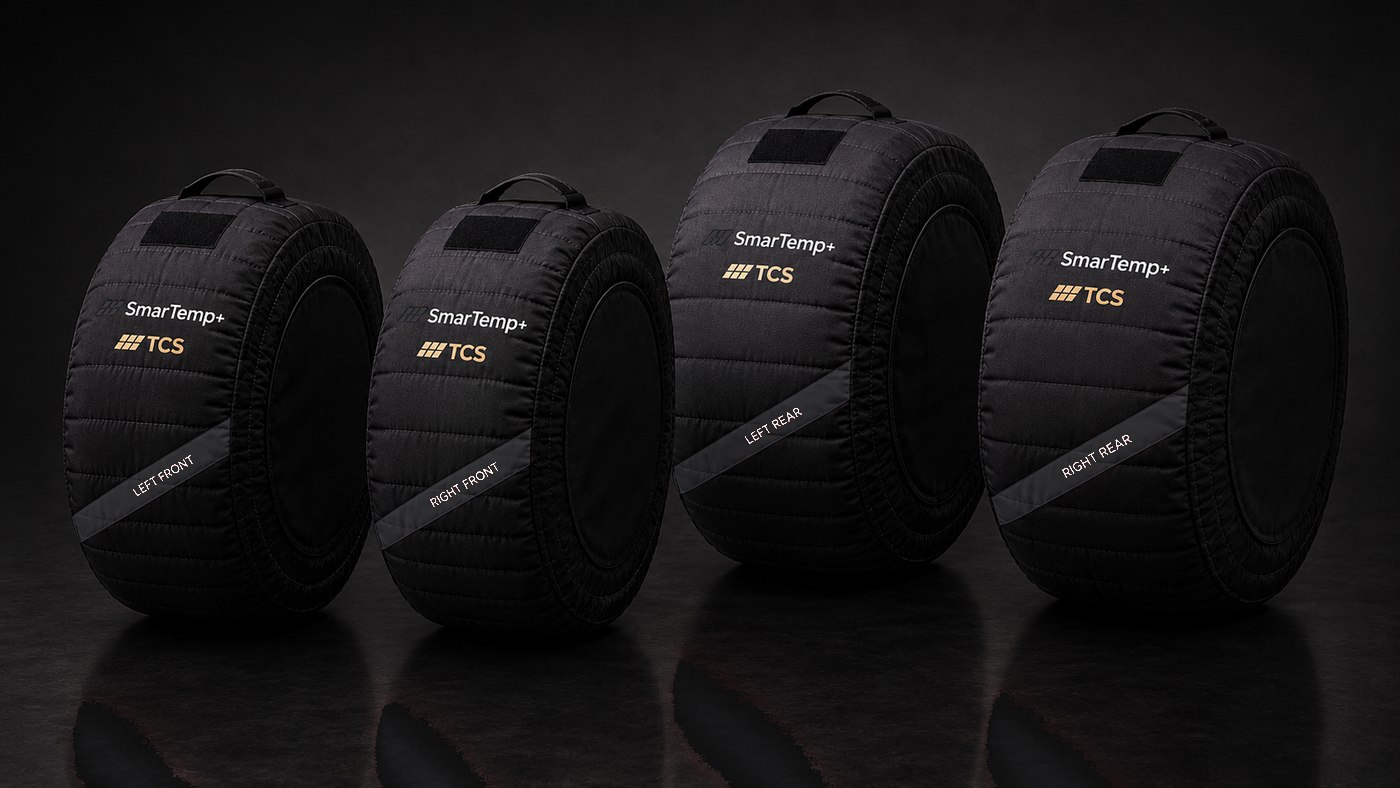
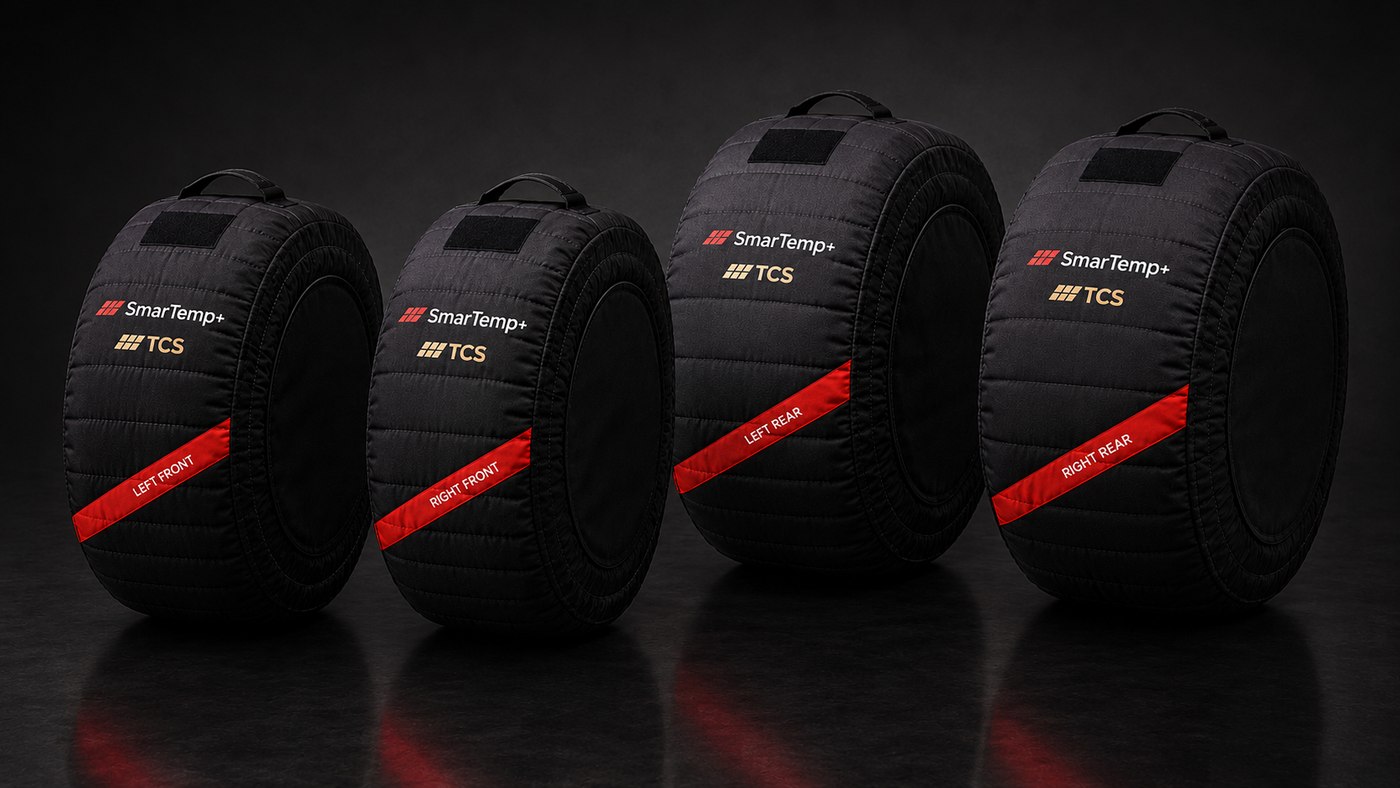
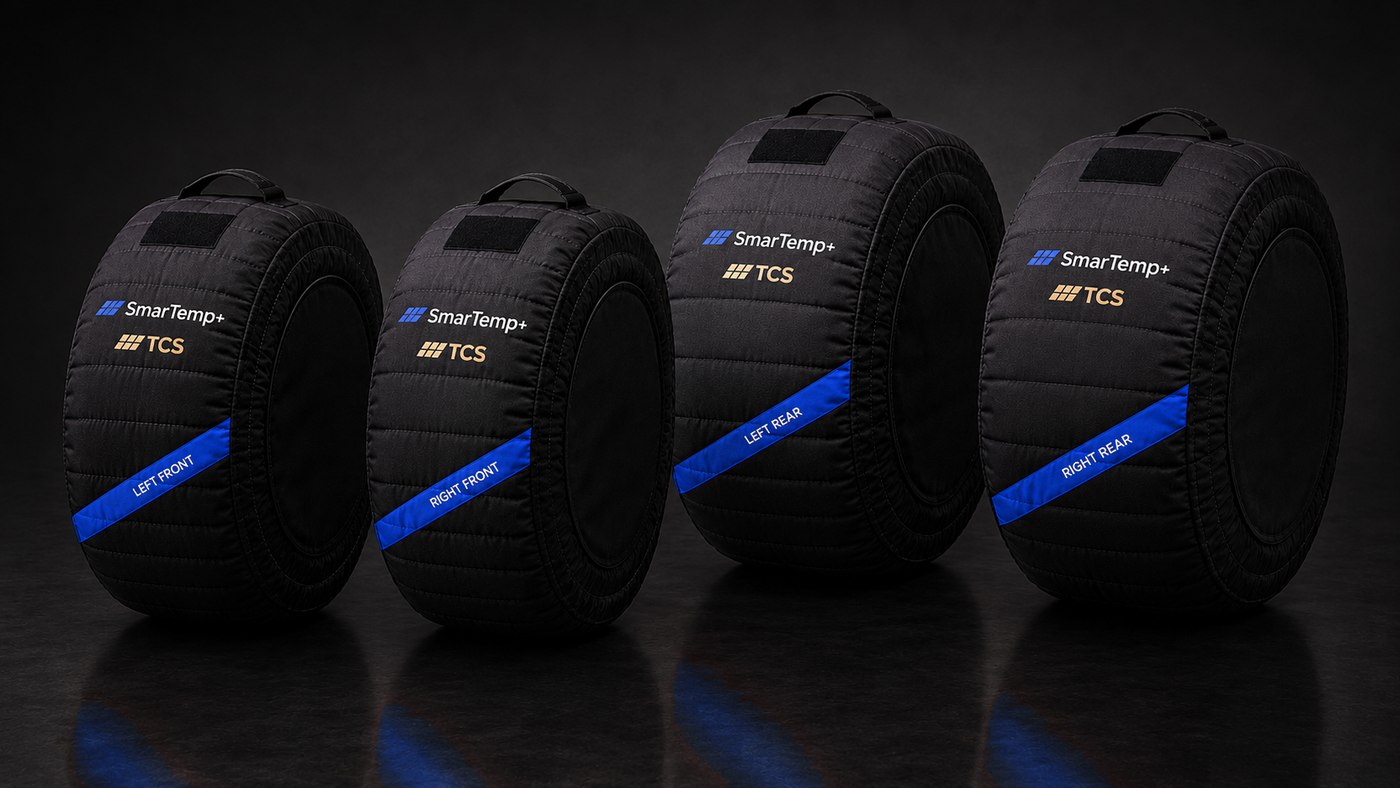
SmarTemp places every tire in its engineered
performance window and holds it there, ready when you roll out.
SmartControl is the brain behind every heat cycle.
One controller, multiple channels, every screen. Powered by industry-proven
ThermoLogic firmware that holds the temperatures you set.
The tire warmers and control systems for motorsport are active in the industry today —
track-tested and proven. Soon available to everyone.
Taking reservations now.
A reservation, not a payment. Track proven · Sponsor of Attack Performance · Made in the USA.
★ DESIGNED · ENGINEERED · MADE IN THE USA ★
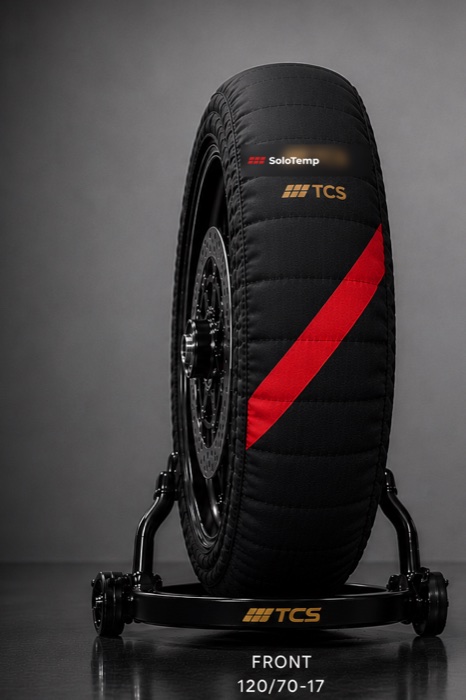
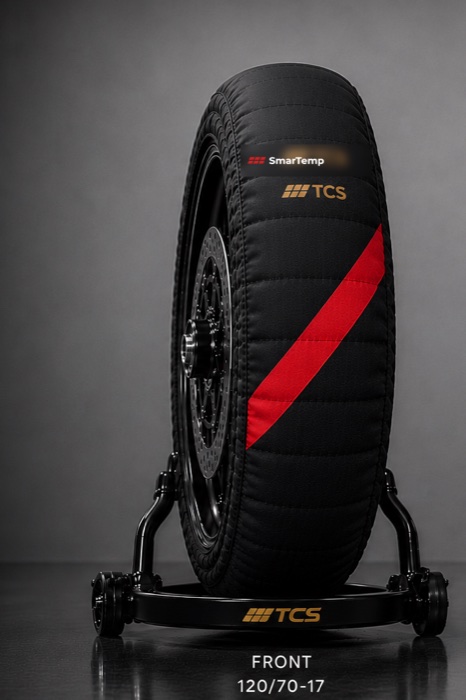
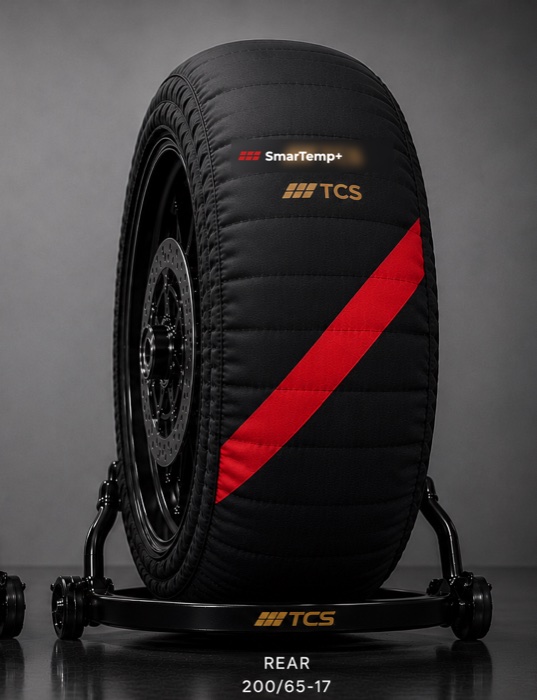
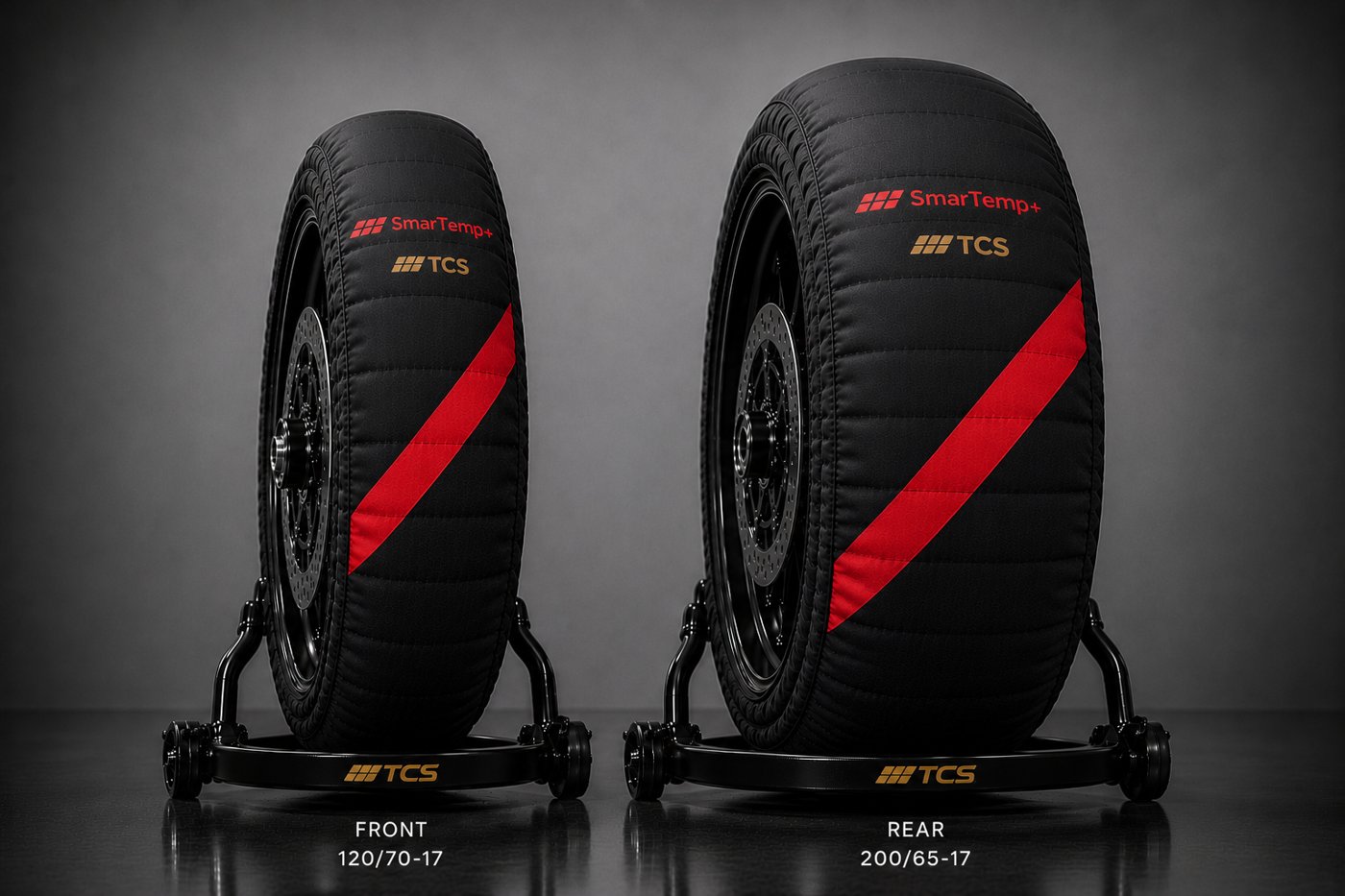
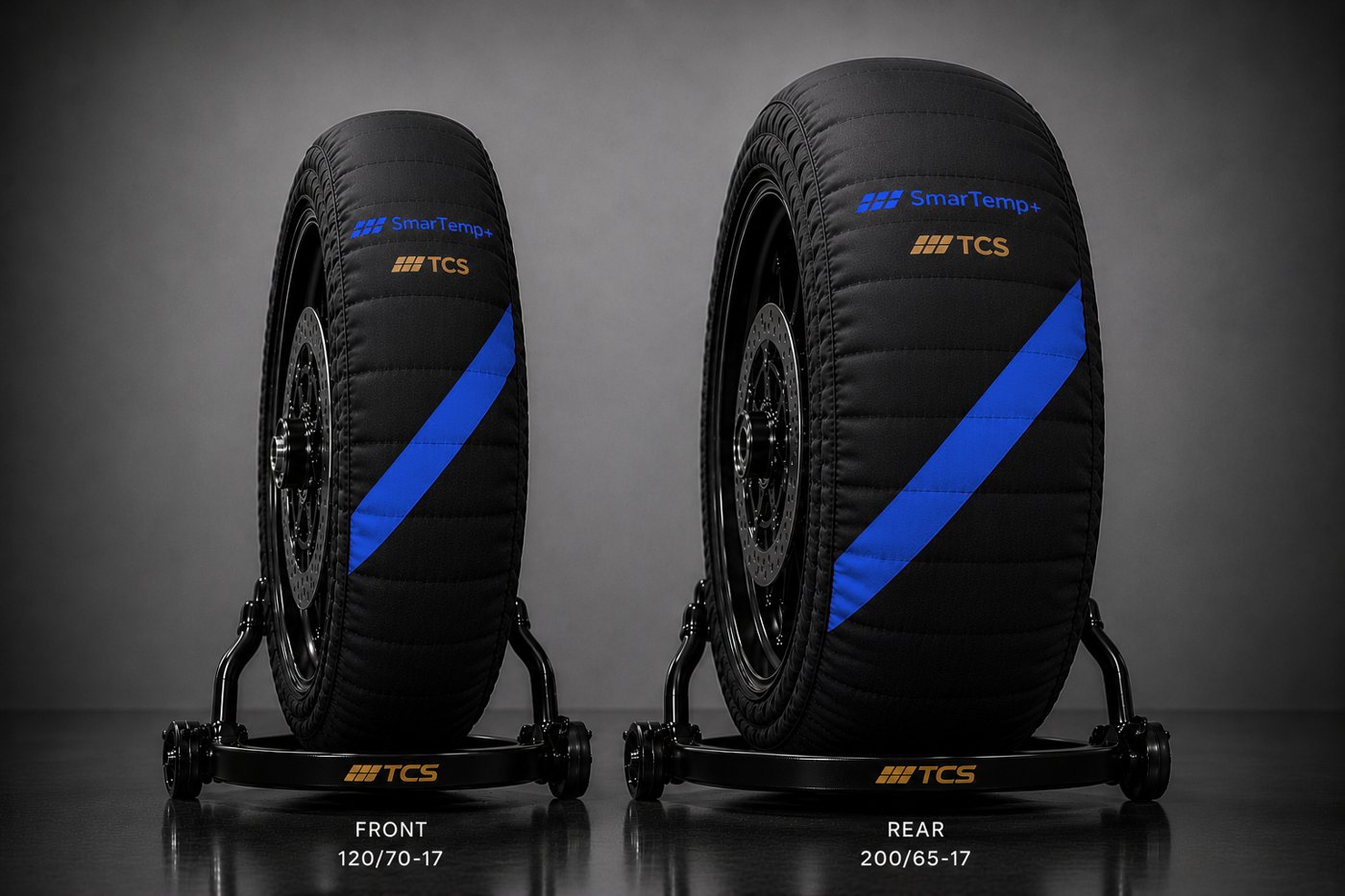
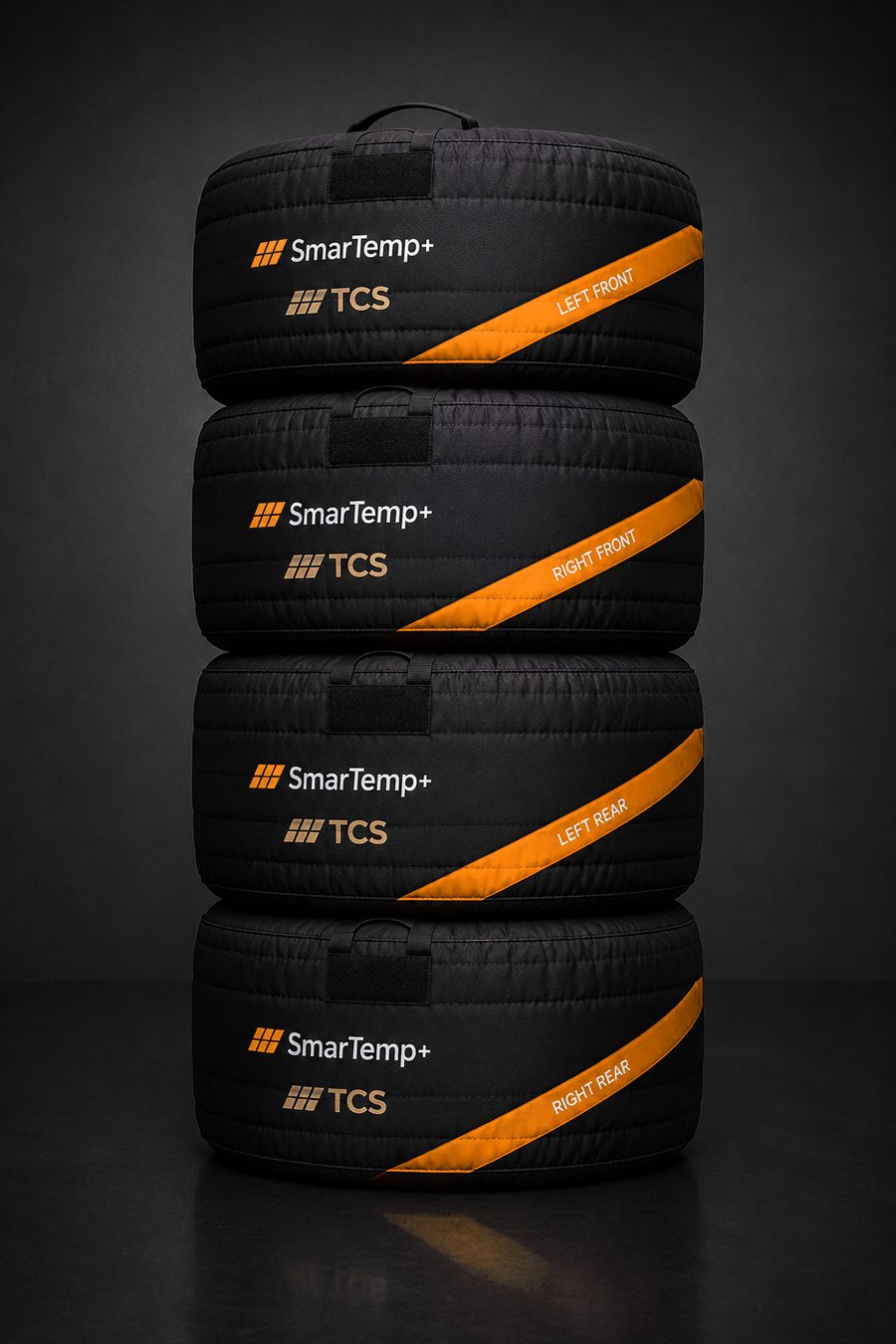
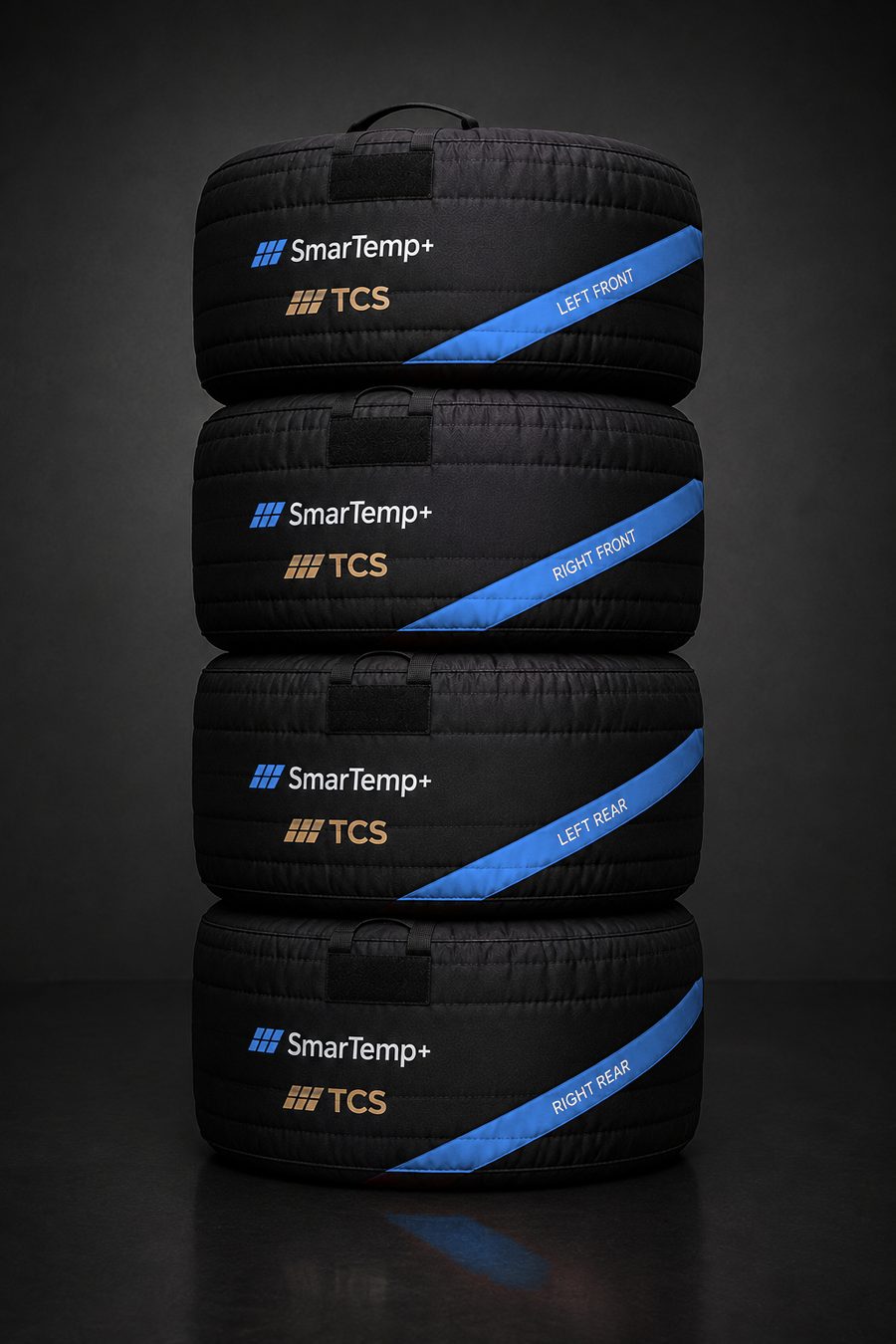
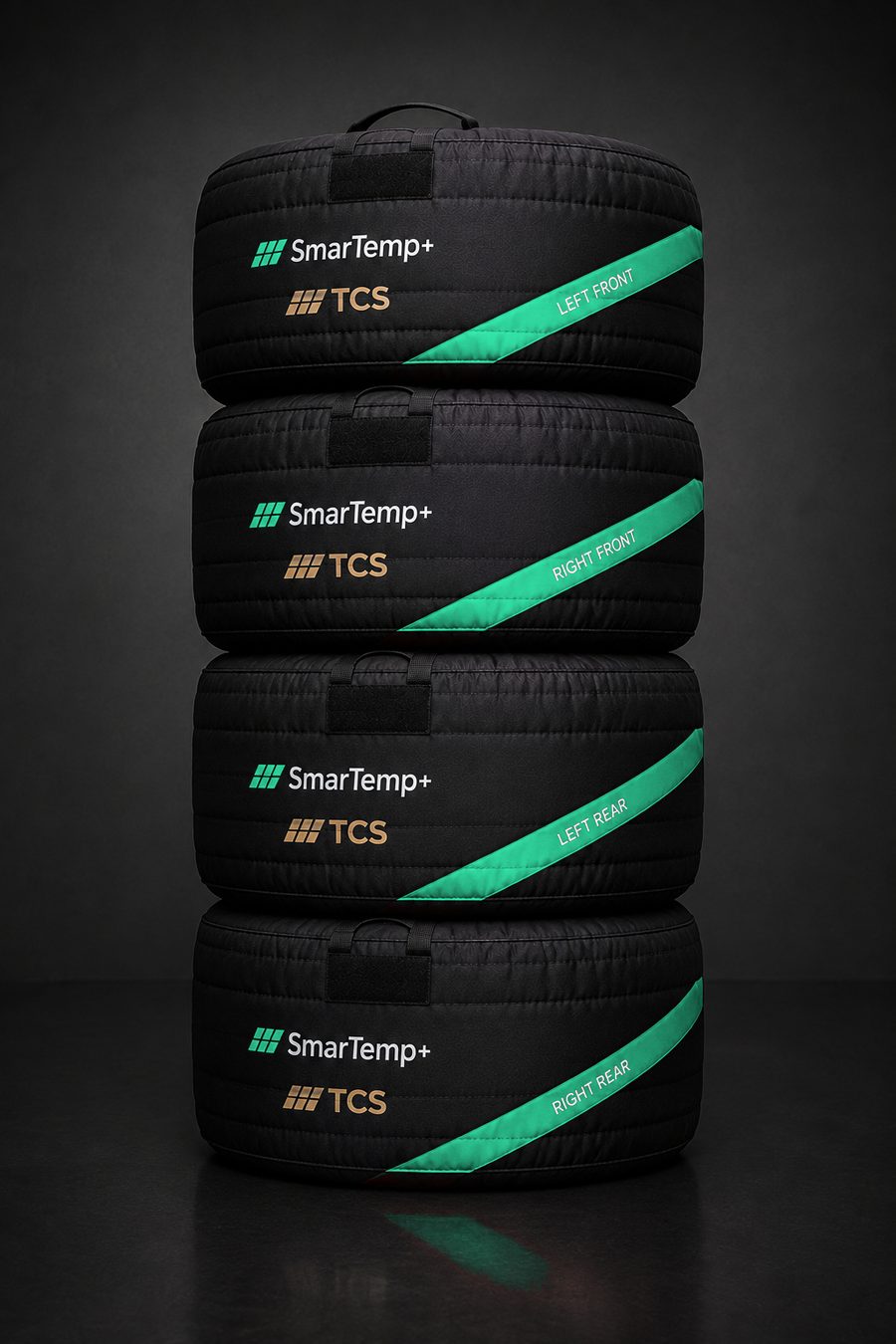
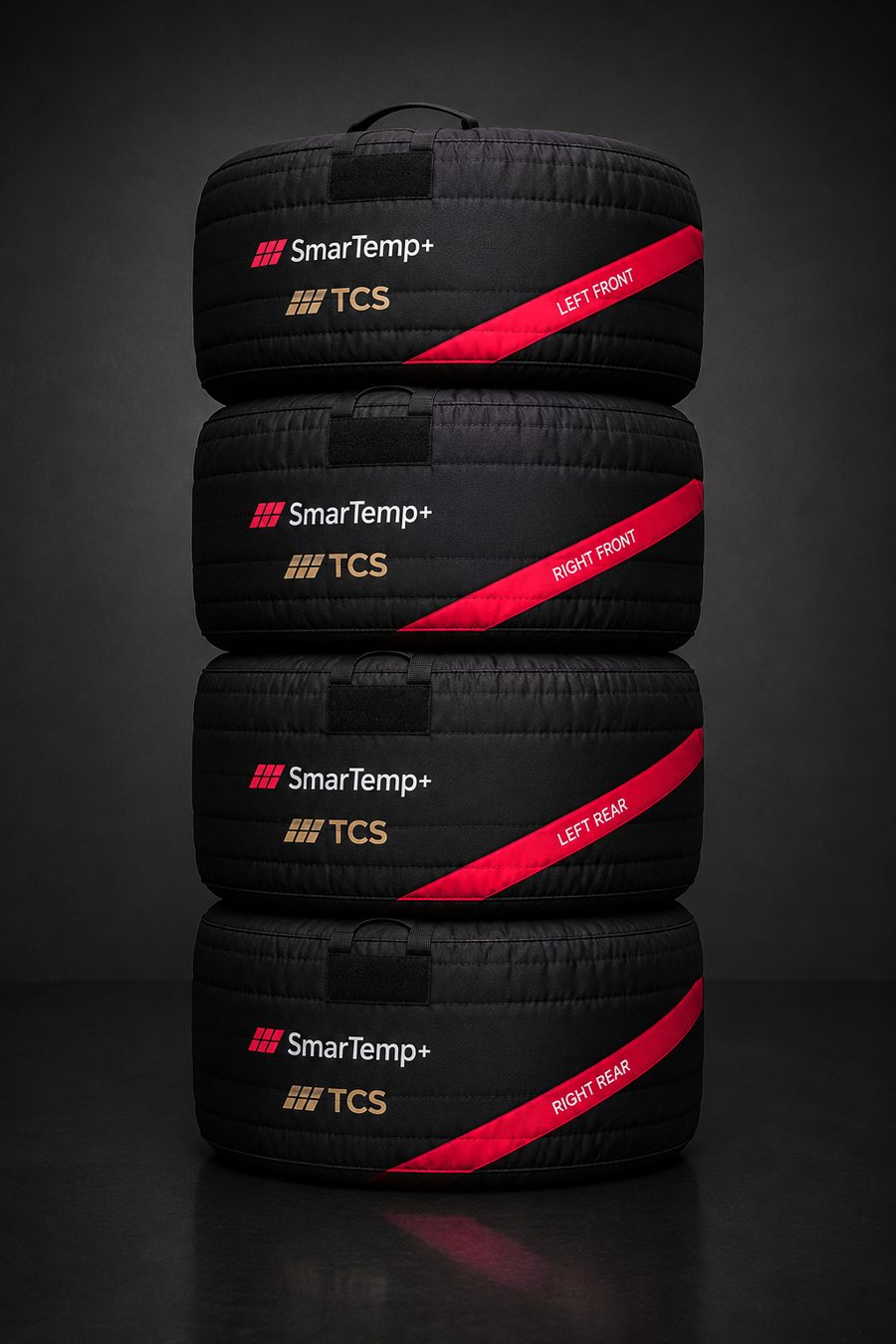
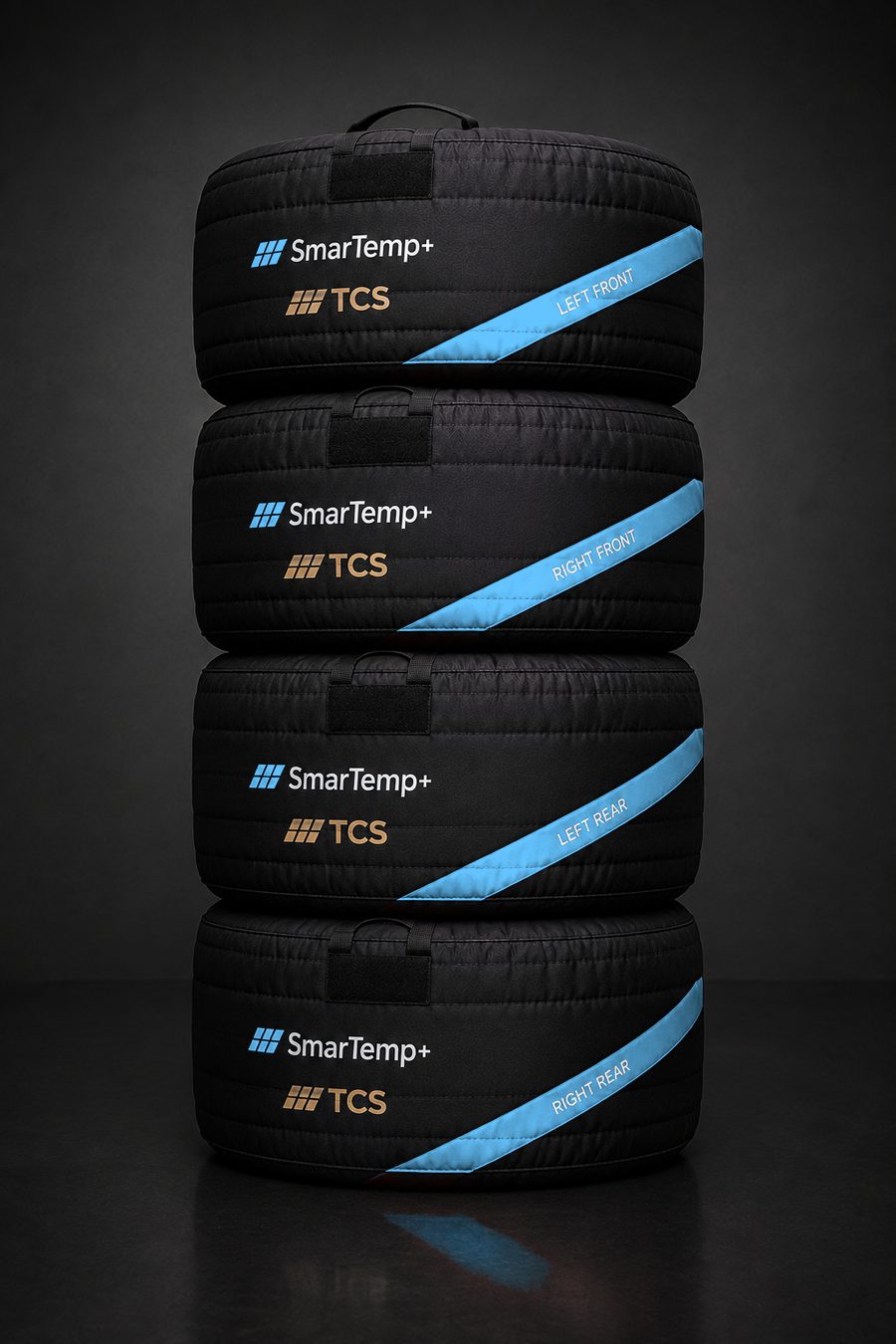
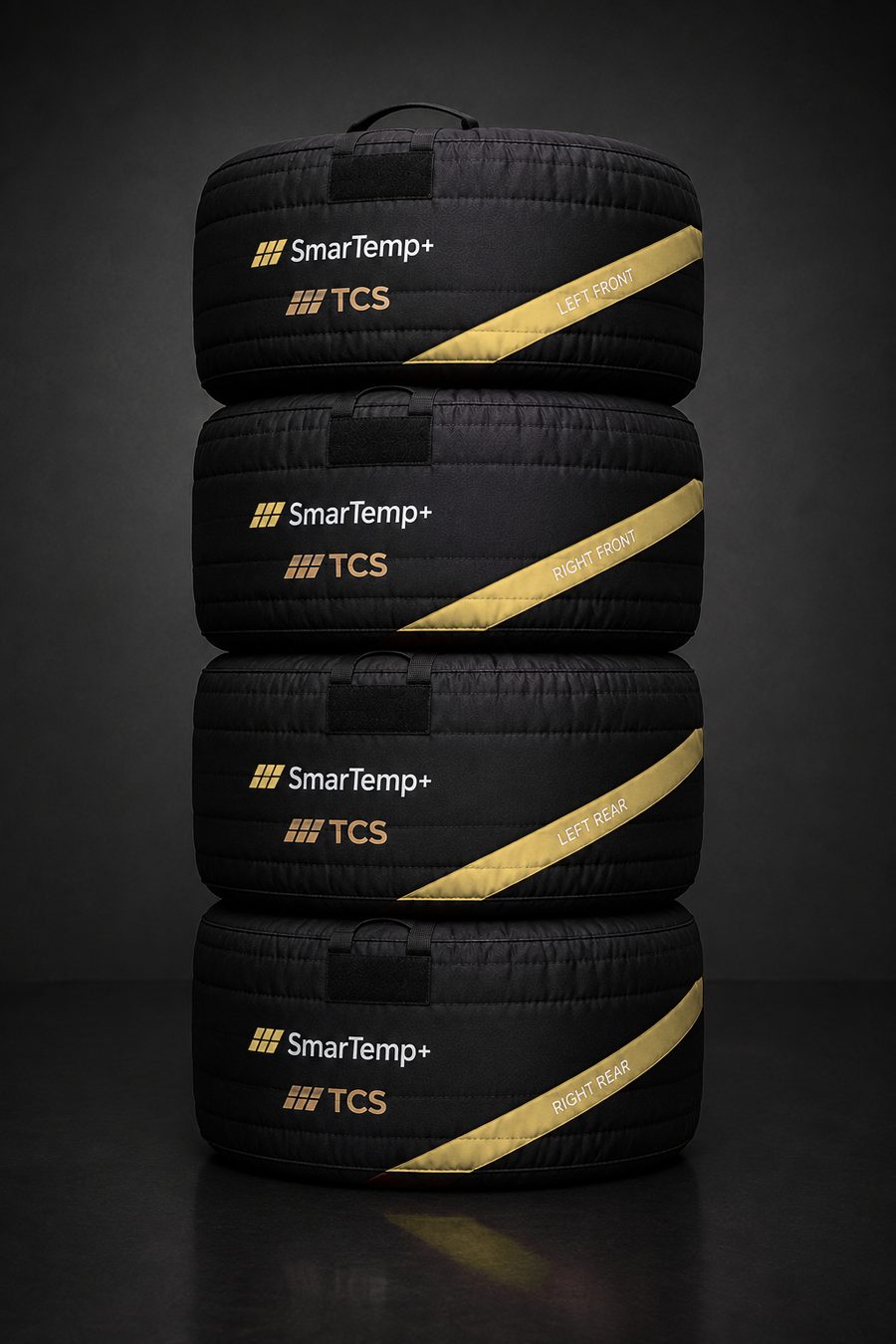
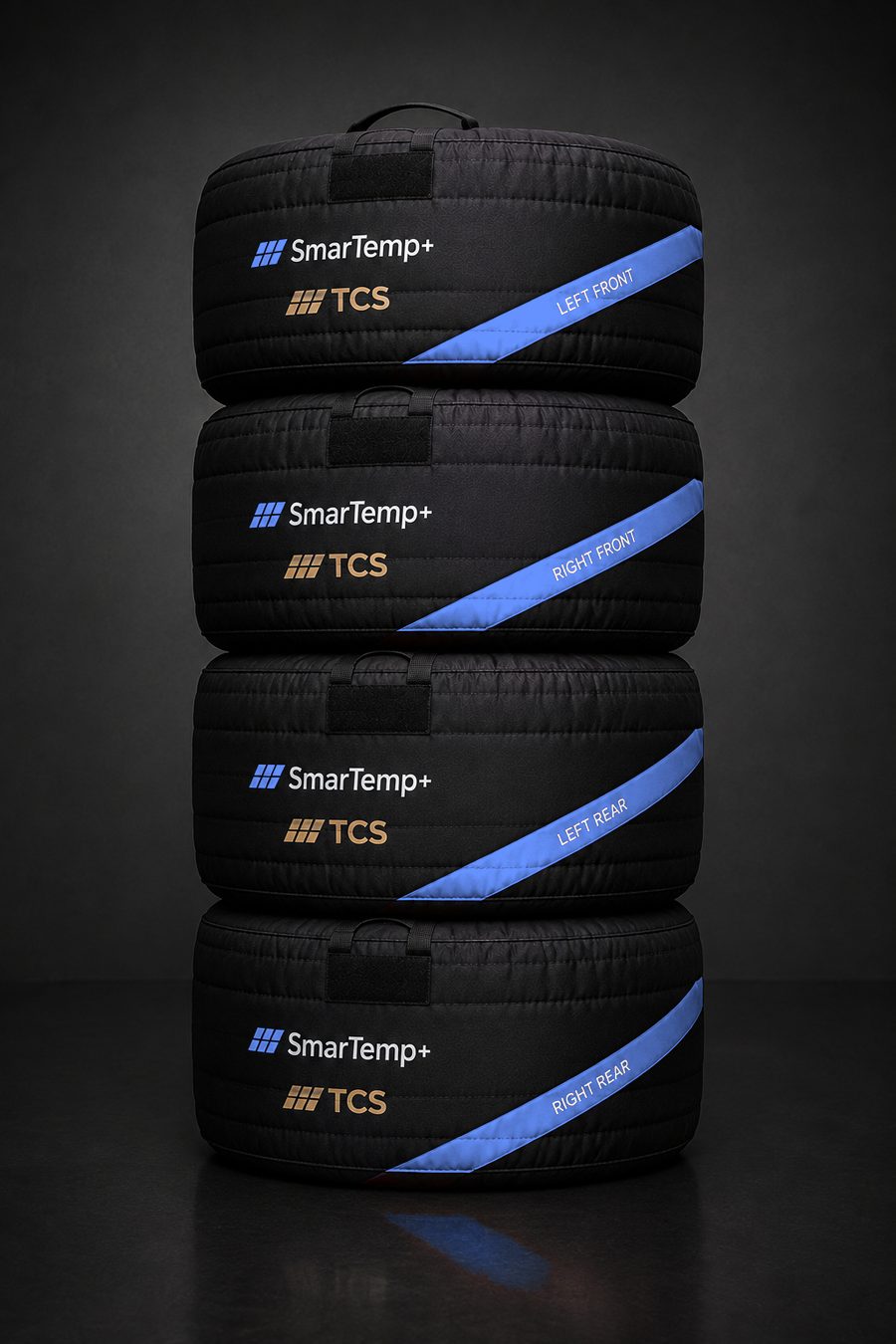
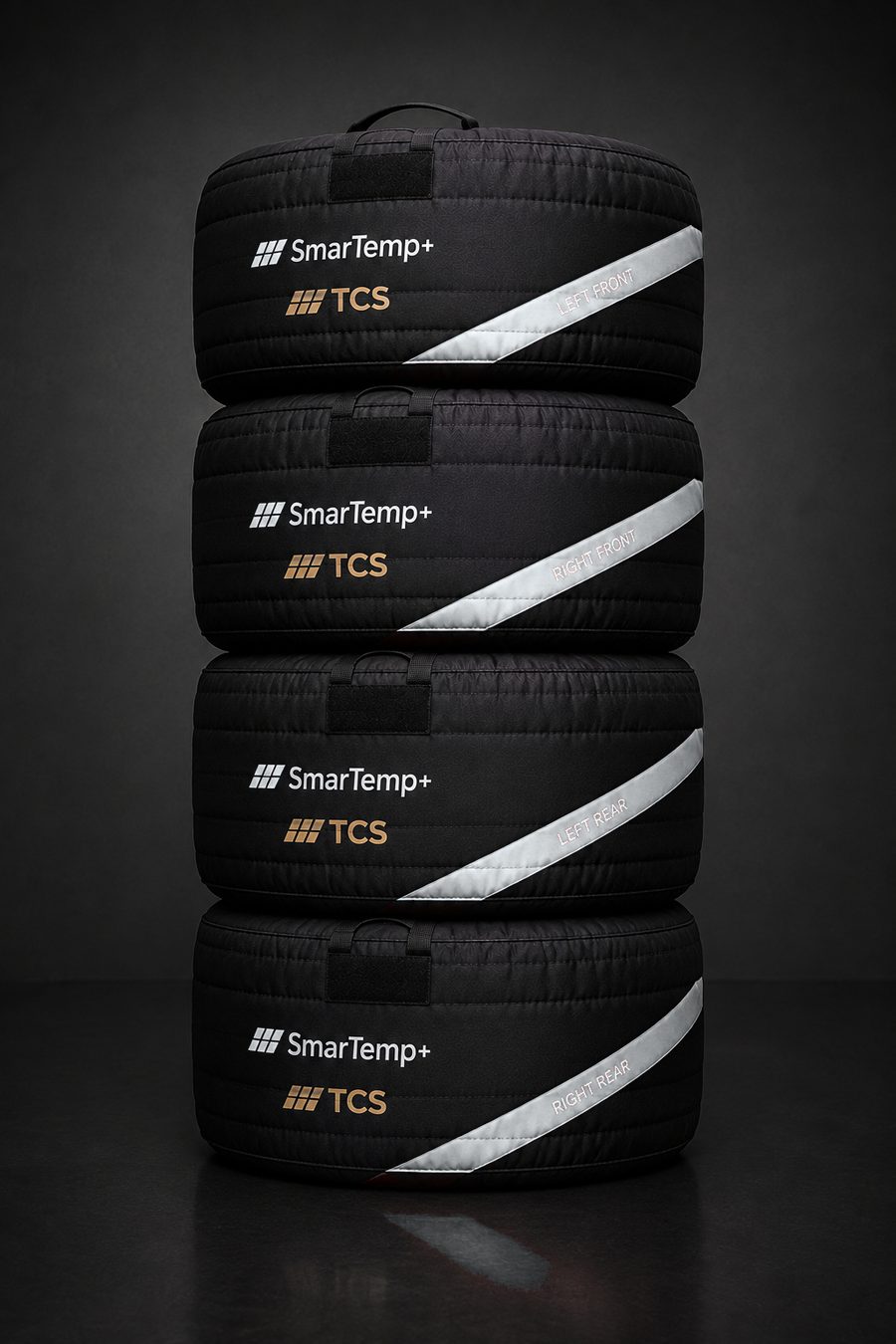
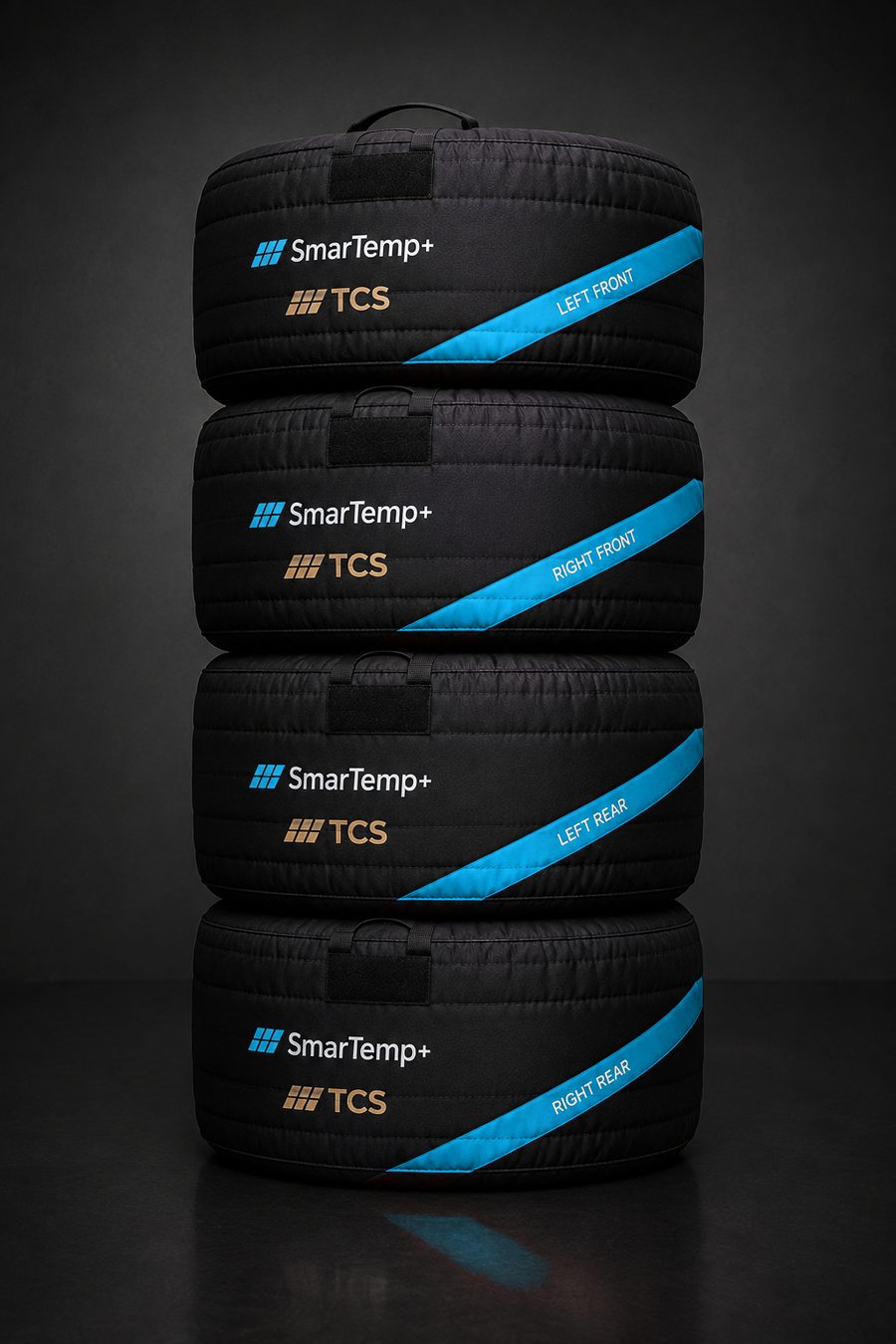
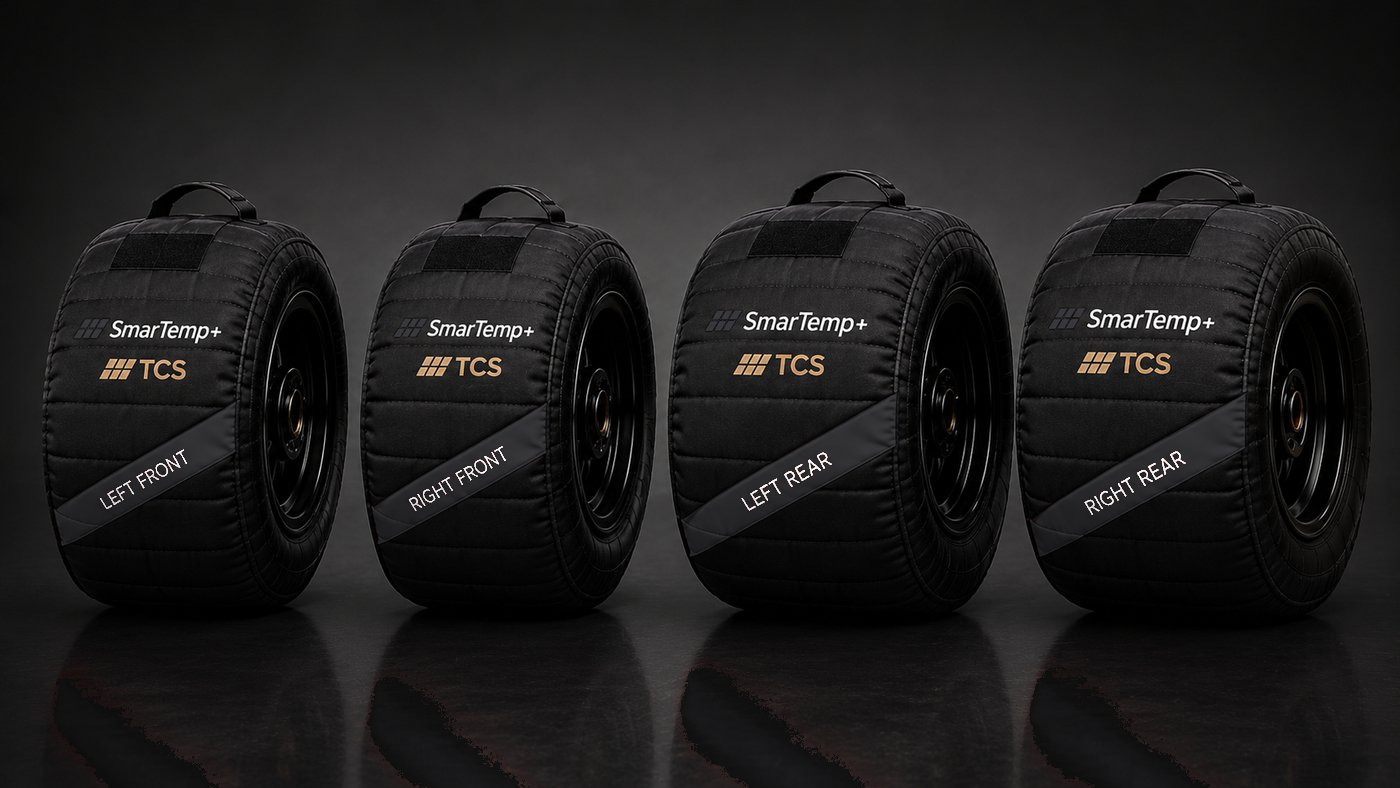
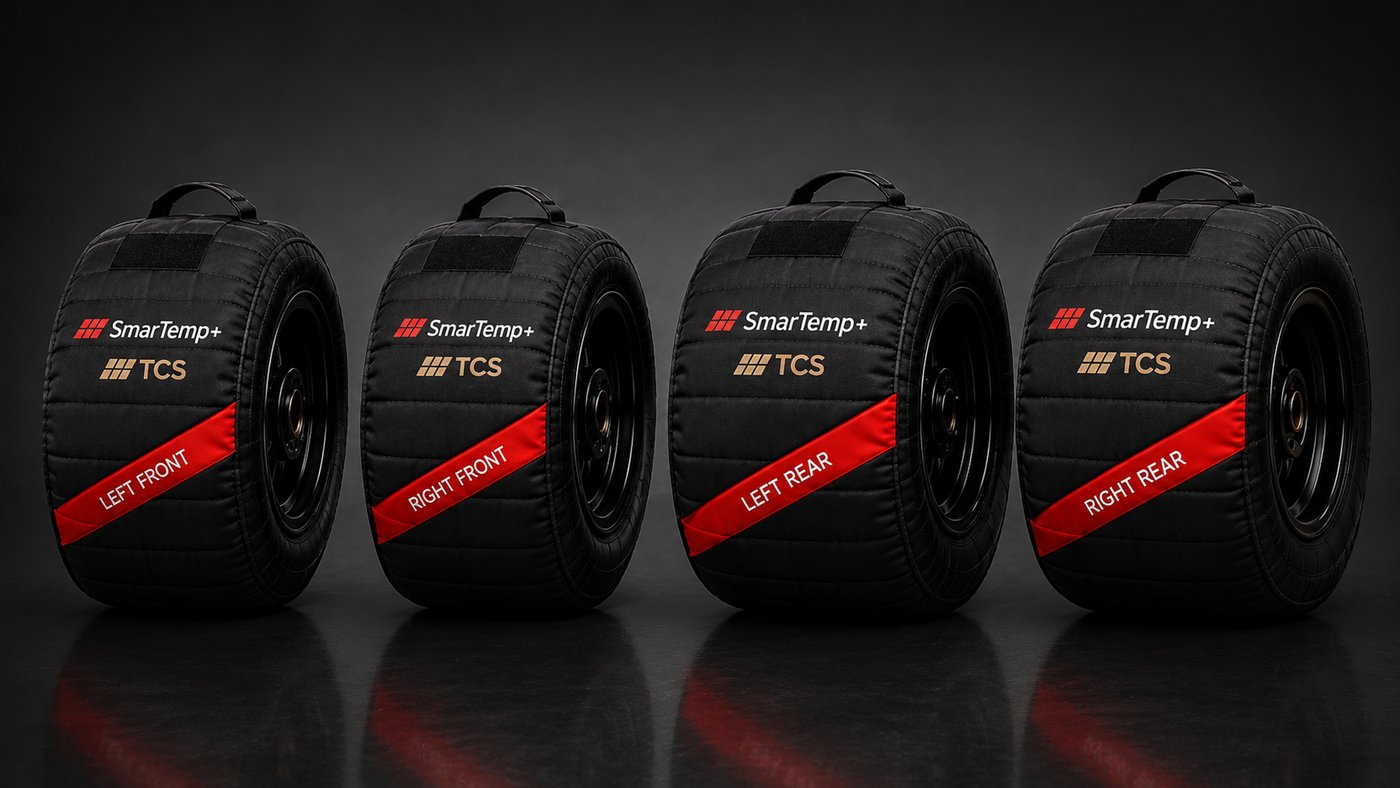
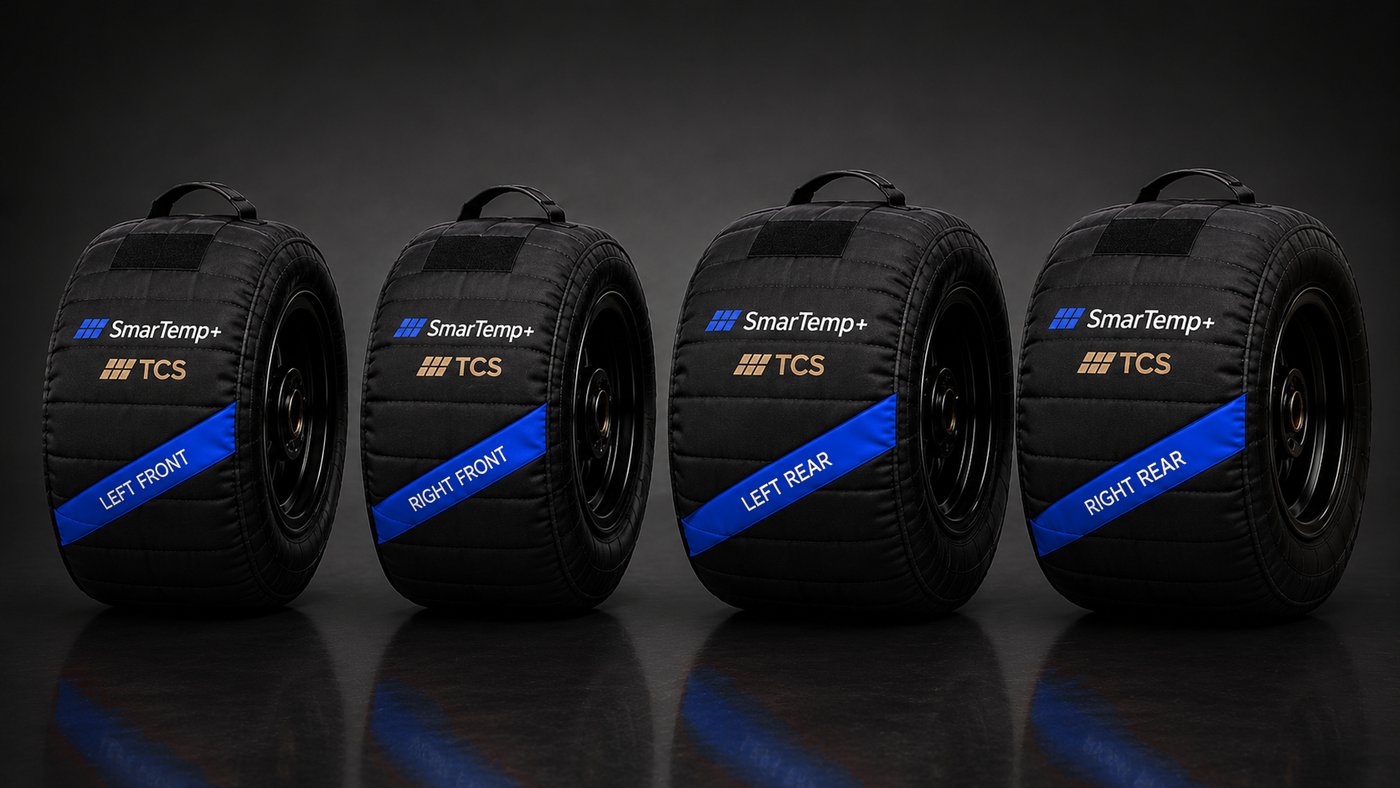
SMARTEMP+ · FRONT 120/70-17 · REAR 200/65-17 SHOWN · MADE FOR EVERY TIRE SIZE · YOUR STRIPE, YOUR COLOR
The screens · drawn from the engineering spec, not imagined
You don't have to believe it works. You can watch it work.
What you see is what you get. The SmartControl screens
drawn here are exactly what ships — feature rich, data rich, complete control of tire conditioning.
You'll wonder why it took so long for tire management to catch up. So did we. That's why we built it.
LIVE
1.85″ ROUND powered by Lite
360×360 · WATCH-SIZED
LIVE
3.5″ · HOME · SET-AND-FORGET
320×480 PORTRAIT · FRONT + REAR
LIVE
3.5″ · PITVIEW
320×480 PORTRAIT · THE GLANCE SCREEN
The live configuration, small end to large. Every glass runs the same
ThermoLogic demo fleet you're watching here —
six warmer channels heating, holding, and (on channel five) catching a fault instead of hiding it.
LIVE
12.3″ · 1920×720 · FOUR PORTRAIT COLUMNS + CHANNEL RAIL + STATUS BAND
Ready is measured. Faults have names. Your whole paddock, visible from anywhere.
Industry firsts — performance features we couldn’t find anywhere else. Each card is the short version: what it is, why it matters, how it works. Open one for the deep dive.
Also nice: mount the controller portrait or landscape — the screen redraws itself to fit, and every display tells the controller what it is the moment you plug it in.
RUNNING TODAY · READY = MEASURED
Ready means ready to perform
Most warmers call a tire “ready” when the surface probe touches the setpoint, or when a timer runs out. Neither proves the tire is soaked through. We made “ready” a verdict the controller has to earn.
Bottom line
READY is minutes measured inside the compound’s temperature window, against the tire maker’s own soak spec. The clock pauses on a dip and never resets.
The part
Two Type J thermocouples in every warmer — one on the tread element, one on the rim element. Each lands on its own reader chip, a Microchip MCP9601, which does the cold-junction compensation, the standards-table (NIST) linearization and the open/short fault detection in silicon and hands the firmware a temperature in 0.0625 °C steps. Twelve channels, twelve chips, no sharing, no averaging — every number on the glass is a measurement from one probe.
What the firmware does with it
The controller carries a library of compound profiles built from the tire makers’ published soak specs. Once a probe reads inside its window, a soak clock starts adding up time. Dip below the window — a gust, a cover lifted — and the clock pauses. It never resets to zero; it picks up where it left off. READY shows only when accumulated time at temperature meets that compound’s spec, and only if the probe that said so has itself passed its checks.
What you get
A tire you can trust to roll out, and a number behind it. The difference between “the light’s green” and “it’s soaked.”
Spec sheet
SensorType J thermocouple · 2 per warmer (tread + rim)
ReaderMicrochip MCP9601 · one chip per channel · 12 channels
Resolution0.0625 °C per step · integer math in the safety path, no floats
Sampling≥1 reading/s per channel · fault register read with every reading
Ready ruletime-in-window ≥ compound soak spec · pauses on dip · never resets
To our knowledge, no other warmer system gates “ready” on measured soak against the tire maker’s spec. Running in current firmware.
RUNNING TODAY · NAMED FAULTS
It never fails in silence
Power, a heating element, a loose wire, a warmer circuit — when one of them fails in the paddock, the usual first sign is a hand on a cold tire that was supposed to be ready. Ours tells you, by name, while there is still time to do something about it.
Bottom line
Twenty named fault codes in three tiers, each tied to one channel. A broken or shorted probe is confirmed and named in about a third of a second. Heat on that channel is cut before the screen even updates.
The element
The heating element is embroidered, not etched. TFP Technology of Falkenstein, Germany (DIN EN ISO 9001) lays insulated 316L stainless heating strands into a flexible carrier by CNC fiber placement — the same process it supplies for aerospace fiber preforms, automotive heating and medical devices. The conductor is insulated in PFA fluoropolymer and rated to 225 °C; TFP rates the construction to 400 °C and 5,000 W/m². We run it at roughly one-fifth of that watt density, which is where longevity comes from. The warmer itself is passive: element, two thermocouples, one sealed 8-pin IP67 connector, no electronics inside the blanket.
The sensing
Each heating channel has its own eyes. The probe chip flags an open or shorted thermocouple in hardware, and a bias network pushes a disconnected probe to a reading no tire could produce. On the power side, every switching device lives in the power enclosure, where each channel’s voltage and current are watched: voltage present with no current means an open element, and a channel’s resistance is compared against the product table at soft-start before full power is allowed. A problem on one channel is seen as that channel’s problem, never a vague system error.
What the firmware does with it
Every fault has a code, a severity and a plain-language name for where it lives — INFO (a four-second notice), WARNING (a banner that stays), CRITICAL (the whole screen, and heat cut first). The cutoff runs ahead of any screen call, so a frozen display can never delay it. Probe faults confirm over three consecutive strikes at ten readings a second, then alert — not ten minutes later, not at the grid. Every alert can be acknowledged and cleared; if it comes straight back, that pattern is itself the diagnosis. CRITICAL faults latch, are written to non-volatile memory so a reboot cannot bypass them, and every operator override is logged as one.
What you get
“Rear · rim · open probe” instead of a silent cold tire. You know what failed, on which wheel, and whether it is worth swapping the warmer or just reseating a connector.
Spec sheet
Fault codes20 named · 10 CRITICAL · 6 WARNING · 4 INFO · each scoped to one channel
Probe faultopen / short / out-of-range flagged in hardware · 3 consecutive strikes at 10 Hz ≈ 0.3 s to alert
Cutoff orderheat cut first, screen second · independent hardware kill wire, active-low, no firmware in the path
PersistenceCRITICALs latch · survive reboot in non-volatile memory · 32-entry fault history
Warmerpassive · element + 2× Type J probes + 8-pin IP67 connector · all switching in the power enclosure
We haven’t found another warmer controller that publishes fault codes at all. Running in current firmware.
RUNNING TODAY · CLOUD PLATFORM
A data platform, not an app
An app is a remote control. The ThermoLogic Platform at platform.thermologic.co is a record: the live state of every one of your units, remote adjustment from anywhere, and a log of every command that came back — including the ones the unit refused.
Bottom line
Your team sees your team’s units and nothing else. Every remote change is bounds-checked on the unit, stamped with who sent it, and logged twice — on the unit and in the cloud.
Private by construction
Sign-in is a passwordless magic link. Every table in the database sits behind Postgres Row-Level Security (RLS) — the database itself, not the web page, enforces that a team’s devices, sessions and tires are readable only by that team’s members, by role: owner, admin, member. There is no paddock-wide view. Your paddock, your screen.
The link
The controller’s Wi-Fi runs on its own co-processor, kept apart from the safety core, so network traffic can never interrupt heating control. If the connection drops, heat carries on exactly as programmed. Each unit carries its own 256-bit device token, issued through a six-character pairing code shown on the glass — no accounts typed on a touchscreen in gloves. The code lives ten minutes and is delivered once; the token is stored only as a hash and can be revoked. Transport is TLS encryption with the root certificate pinned in the firmware.
Checked both ways
The unit reports its state every two seconds. Commands come down only when the unit asks for them, and the unit never trusts the cloud: every number is bounds-checked again (20.0–125.9 °C), every option whitelisted, and the change is applied through the same code path as a press on the touchscreen. A sequence counter turns a replay into a no-op. The unit’s next report echoes what it actually applied — that echo is the acknowledgement you see on the console. Every command, accepted or rejected with the reason, goes to a 32-entry log on the unit that survives reboot, and to an audit row in the cloud: who, from what, to what, when.
What you get
Your units on one screen from the motorhome, the hotel, or the factory — live temperatures, soak state, faults, session history and exports — and a record of who changed what, when. Nothing shared with the truck next door.
Spec sheet
PlatformThermoLogic Platform · platform.thermologic.co · installable web app, one URL, no native app
Sign-inpasswordless magic link (Supabase Auth, PKCE)
IsolationPostgres Row-Level Security on every table · team-scoped · roles owner / admin / member
Device auth256-bit per-device token, stored as SHA-256 hash, revocable · 6-character pairing code, 10-min life, delivered once
TransportTLS · root certificate pinned in firmware · Wi-Fi on a separate co-processor
Uplinkstate report every 2 s · temperatures, soak state, relay truth, fault flags, firmware version
Command checkbounds-checked on the unit · same path as the button · sequence counter · echoed back as the ack
Auditon-unit 32-entry log, accepted + rejected, survives reboot · cloud row per change: user, before, after, time
We haven’t found another tire warmer with a cloud data path. Live today at platform.thermologic.co.
RUNNING TODAY · SELF-CHECKING PROBES
The sensors don’t get trusted — they get tested
A thermocouple is a welded junction and a crimp, living in a hot blanket that gets folded, dragged, and stepped on. Crimps loosen. Most warmers trust that sensor forever.
Bottom line
Every probe is tested at startup and kept under test through the whole cycle. A failure is confirmed on three consecutive checks and named on the glass in about a third of a second — not ten minutes later, not at the grid.
The part
A Type J thermocouple, specified by TCS for SmarTemp, one on each element, each sitting on its own MCP9601 reader chip. The chip checks the probe against its own cold junction and flags an open or shorted circuit in hardware; a bias network pushes a disconnected probe to a reading that cannot be mistaken for a tire. Nothing is shared between channels, so a probe can only ever fail as itself.
What the firmware does with it
At power-up every channel must pass a self-diagnostic before heat is allowed. From then on the fast loop reads each probe ten times a second, and reads the fault register with every temperature. On top of that a deep check rotates through the loops — front tread, rear tread, front rim, rear rim — thirty seconds a slot, so every probe is deep-checked every two minutes through warm-up, hold and cooldown: fault register clear, reading in a plausible band, cold junction sane, chip still answering on the bus. Three consecutive failures confirm a fault; one clean read resets the count. A tread-probe fault kills heat on that side and needs an acknowledge. A rim-probe fault degrades gracefully — that side keeps running on its tread probe and says so.
What you get
Confidence that READY came from a sensor that was itself checked seconds ago — and a warning, by name, on the channel, when one is going bad.
Spec sheet
ProbeType J · one per element · own reader chip, own channel, never averaged
Startupper-channel self-diagnostic before heat is allowed
Fast loop10 readings/s per probe · fault register read with every reading
Deep checkrotation front tread → rear tread → front rim → rear rim · 30 s per slot · every probe every 120 s · runs through warm-up, hold, cooldown
Checksfault register · reading in band · cold junction in band · chip answering
Confirm3 consecutive strikes → latched · open/short ≈ 0.3 s to alert · 1 clean read resets
On faulttread probe: heat cut on that side + acknowledge · rim probe: side continues on tread probe
To our knowledge, no other warmer validates its own probes continuously during the cycle. Fast-loop checks running in current firmware; the deep-check rotation is in the build.
RUNNING TODAY · NO AVERAGES · EVER
Every sensor is its own truth
A warmer is only as honest as the sensor inside it. Here is what the industry puts in the blanket, what we put there, and why — including the cheaper design we drew, priced, and killed.
Bottom line
One Type J thermocouple on every element, one reader chip per probe, nothing averaged, nothing trusted without a check. A broken probe is reported as a fault — never as a temperature.
What the industry uses
Most warmers close their loop on one sensor per blanket, reading the surface. On entry lines it is not a sensor at all but a bimetal snap-disc: a switch that clicks off and on around a fixed temperature, several degrees either side, with no reading and no way to know it has welded shut. Premium lines use a resistance sensor or a thermistor feeding a PID loop (the standard closed-loop controller), sometimes two probes for evenness under one setpoint. Sensor type is rarely published; “ready” is often a timer. We haven’t found one that says what happens when the probe lies.
The compromise sensors
A thermistor is cheap and simple, but it is nonlinear, drifts with thermal cycling, and fails plausibly — a cracked bead still returns a believable number while the tire cooks or goes cold. A platinum resistance thermometer (RTD) is accurate and linear, and a fair choice; the trade is thermal mass (slower), fragility at the element, self-heating from its excitation current, and extra wires to cancel lead resistance over a long harness. Neither, on its own, tells a controller it is lying.
What we use, and why
A thermocouple is two dissimilar wires welded at the tip; the junction itself is the sensor, so there is nothing to crack and nothing to self-heat. We chose Type J (iron–constantan) over the more common Type K: about 50 µV per degree against K’s 41 — roughly a fifth more signal for the same wire, the same chip and the same cost. J’s one weakness, an iron leg that oxidizes above ~200 °C, never engages in a blanket that tops out at 125. Each probe lands on its own Microchip MCP9601, which measures the cold junction at that probe’s own terminal, does the standards-table (NIST) linearization in silicon, and flags an open or shorted circuit in hardware.
The road not taken
One analog multiplexer, one amplifier, one converter and one shared cold-junction sensor for all twelve probes. About $38 a unit cheaper. We drew it, priced it, and killed it in July 2026: a single failed part blinds all twelve channels at once, and one cold-junction reading has to guess at twelve different terminal temperatures. One chip per channel is fault isolation you can point to.
What the firmware does with it
There is no average anywhere in the code — the field does not exist. Tread and rim each have their own setpoint, state machine, fault table, watchdog, cooldown and telemetry stream. When probes are compared it is probe to probe, never to a blended number. By default the rim tracks the tire at a small offset until you set it yourself. A tread at 85 and a rim at 55 never become “70 — fine.”
What you get
Each surface reaches its own target on its own evidence. A rim that is behind stays visibly behind until it catches up, and a probe that is going bad is named, not averaged away.
Spec sheet
Industry1 surface sensor per blanket · bimetal snap-disc (entry) or RTD / thermistor + PID (premium) · sensor type rarely published
OursType J thermocouple, iron–constantan · 1 per element · ~50 µV/°C (Type K ≈ 41)
ReaderMicrochip MCP9601 · 1 per probe · cold junction measured at its own terminal · open/short flagged in hardware
Rejected16:1 analog mux + 1 amp + 1 ADC + 1 shared cold junction · ~$38/unit cheaper · killed July 2026, one failure blinds 12 channels
Doctrineno averaging across channels · no averaging across time · fault is never reported as a number
Some warmers split the tread into circuits for even heating — a real layout advantage — but run them under one setpoint. Ours is a rule, not a channel count: every probe is its own truth. Running in current firmware.
RUNNING TODAY · PROGRAMMED CYCLES
Heat by the numbers
A knob gives you a number. A program gives you a shape — how fast to climb, how long to soak, when to hold, how to come down.
The part
Each channel’s power stage is switched by the controller many times a second, which is what lets it follow a ramp instead of slamming on and off around a setpoint.
What the firmware does with it
The heat cycle is a typed program: Preheat, Ramp, Soak, Hold, Cool. Each stage carries a temperature or a duration, and the language will not let a duration sit where a temperature belongs. Profiles start from the tire maker’s published baseline — their “X° for Y minutes” is the soak stage; the whole cycle runs longer — and you can save your own. It is designed so a malformed program is refused before it runs, whether it came from the glass, the cloud, or the console.
What you get
Repeatable heat. The same profile, every weekend, on every wheel — and a change you can see written down instead of a knob someone nudged.
Program stages run in current firmware; the refuse-to-run validator is designed in and being built out. We haven’t found another warmer that treats heat as a program rather than a setpoint.
RUNNING TODAY · FAIL-SAFE HARDWARE
Safe before software even starts
Safety that depends on software working is safety that fails when software does. Ours is wired so the safe state is the default state.
The part
The kill line is a dedicated wire with a pull-down resistor. Its resting state is OFF: a broken wire, an unplugged connector, or a board that has not booted yet all read as “kill.” Heater outputs are the opposite — they must be actively driven ON, and they boot OFF.
What the firmware does with it
The very first instruction the firmware runs puts every heater output in the OFF state — before Wi-Fi, before the screen, before anything. The kill routine lives in a memory region that stays executable even if the main program crashes or flash is being updated. The firmware refuses to compile at all unless the output polarity has been checked and signed off. The command link to the power supply is designed as a heartbeat: silence, and the supply drops its heaters on its own.
What you get
A cut cable means off. A crashed processor means off. A lost link means off. Not because software noticed — because the wiring was built that way.
Nobody else we have found publishes how their warmer behaves when something breaks. Kill line and boot-OFF run in current hardware and firmware; the heartbeat link is designed into the supply now being built.
RUNNING TODAY · THE RECEIPT
Your tire’s first logbook
Every session your tires go through leaves no record anywhere. Ours writes one — timestamped, structured, comparable.
The part
Storage on the controller board, a battery-backed clock so timestamps are right even after a week unplugged, and a USB port for pulling records onto a thumb drive.
What the firmware does with it
Every cycle, every stage change, every fault and every command is written as a structured entry with a time on it — not a screenshot, not a log line. The live stream goes to the cloud console as it happens; fault history is kept on the unit across reboots. The full on-board session record is designed as append-only, so nothing can be quietly edited after the fact.
What you get
This weekend comparable to last season. A warm-up that took longer than usual is a question you can actually ask, with data to answer it.
Live telemetry and fault history run today; the on-board session record and USB export are designed in and being built out.
RUNNING TODAY · POWER BLIP
It never comes back heating on its own
Paddock power is a generator, a long extension lead, and whoever unplugged what. When it drops and comes back, most warmers simply carry on as if nothing happened. Ours treats a reboot as a question, not a permission.
Bottom line
After any power loss the unit boots with heat off, brings its fault record back from non-volatile memory, and will not resume heating until a person tells it to.
The part
The heat relays are driven through a path that idles off: pull-downs hold both channels off through boot before any firmware runs, and the same hardware kill wire that guards a cut cable guards the reboot.
What the firmware does with it
Forcing both relays off is the first instruction of start-up, ahead of the display, the radios, or anything that could fail. Any critical fault that was latched before the lights went out is read back and written into history, so a reboot cannot be used to wipe one. Setpoints, compound and program survive; heat waits. A health-gated automatic resume — every probe answering, every reading plausible for the stage it left, no latched fault — is designed and in the build; until it ships, the rule is simple: a human restarts it.
What you get
No warmer quietly running in an empty awning after a generator hiccup, and no lost fault history.
Spec sheet
Bootboth heat relays forced OFF as step 1 of start-up · hardware pull-downs hold OFF before firmware runs
Resumeoperator CLEAR + START · health-gated auto-resume designed, in build
To our knowledge, no other warmer refuses to resume after a power loss. Boot-off running in current firmware; automatic health-gated resume in development.
BUILT IN · LIGHTING UP · TAP TO DO
The tire carries its own identity
A tire set should know its own compound and its own history. A coin-size sticker, no battery, gives it that.
The part
An NFC reader and antenna are built into every controller. The stickers are passive tags — the same kind of chip as a contactless card — that ride on the wheel or the warmer.
What the firmware does with it
Designed so that tapping a tagged set loads that set’s compound profile and its heat history: how many cycles it has seen, when it was last soaked. Tapping your phone pairs it to the unit with no code to type. The reader is on the board today; this behaviour is the next firmware to light it up.
What you get
No menu-diving to pick a compound. No wondering whether this set has already done three heat cycles.
Hardware ships in every unit. Software is lighting up.
BUILT IN · LIGHTING UP · SESSION AWARENESS
Warm to the schedule
A warmer that knows where it is can put a place on every record — and, eventually, warm toward a session time rather than a button press.
The part
A lap-timer-grade GPS receiver on the board — the same class of positioning used to time laps, not the once-a-second kind in a phone.
What the firmware does with it
Designed so the unit recognises which circuit it is at and stamps every session record with a place as well as a time. That is the foundation for the next step: knowing the day’s schedule and having the tires ready for the session, not just ready.
What you get
Logs that say where, not just when. A season’s data you can sort by circuit.
Hardware ships in every unit. Software is lighting up; the schedule feature follows.
BUILT IN · LIGHTING UP · PADDOCK-SCALE RADIO
The whole fleet, no infrastructure
Paddock Wi-Fi is unreliable and someone else’s. A long-range radio that needs no network is yours.
The part
A sub-gigahertz long-range radio with an external antenna on every controller. It sends small packets a long way on very little power — the same technology used for city-scale sensor networks.
What the firmware does with it
Designed so each station sends its live status to one console with no router, no network name, no pairing ceremony. Safety never rides the radio: if a node loses its link it fails safe on its own, and heat is never commanded over the air.
What you get
Every warmer in the paddock on one screen, from one antenna, with nothing to set up.
Hardware ships in every unit. Software is lighting up. The range we quote will be the range we measure at a circuit.
BUILT IN · LIGHTING UP · ELEMENT SELF-SENSING
The heating wire becomes a sensor
A thermocouple tells you what the tire is doing. It cannot tell you that the blanket is lying on a bench, that it is not seated on the tire, or that the element inside it is a season away from failing. The element can.
The part
Per-channel current sensing sits on the controller board today, next to the switching for each element. Nothing is added to the blanket.
What the firmware does with it
We are keeping the method to ourselves. What we can say: with the element reporting on itself alongside the thermocouple, the controller can tell a warmer heating air from a warmer heating a tire, catch an element that has gone open or shorted through a second, independent path, and watch an element age so it is replaced before it fails on a race morning. Every one of those is a named fault or a scheduled service item, never a surprise.
What you get
Dry-fire caught, a badly seated blanket caught, and element replacement on a schedule instead of on the grid.
Hardware in the unit; firmware in development. Arrives as an upgrade, no new box. Mechanism withheld until ready.
IN DEVELOPMENT · PRESSURE IN THE LOOP
Air joins heat
Hot air expands. Every crew knows the pressure they set cold is not the pressure they will have on the grid, and every crew does the arithmetic by hand. The tire already carries a sensor that knows the answer.
The part
The controller’s radio co-processor speaks Bluetooth to wheel-mounted pressure sensors directly, and the CAN feed from the bike’s own pressure system is a published format. Both paths ride hardware already in the unit.
What the firmware does with it
First, pressure lands on the same glass and in the same record as the heat, per wheel, with a timestamp. Then it informs the conditioning: how it does that is ours to keep for now. Any adjustment stays inside the compound’s spec, is shown on the glass, is written to the record, and can always be overridden. Manual always wins.
What you get
Heat and pressure as one story, in one place, and a hand calculation you no longer have to do.
Some displays show tire pressure; we haven’t found one that lets it inform the warm-up. In development; ships as an upgrade on current hardware.
IN DEVELOPMENT · SMARTLOOP™
Track to rack
Today, what the tire did on track and how it gets prepared for the next stint are two separate conversations. SmartLoop connects them.
The part
It runs on hardware already in the unit — no new box. When it ships, it arrives as an upgrade.
What the firmware does with it
We are keeping the mechanism to ourselves until it is ready. What we can say: any adjustment it makes stays inside the compound’s spec, is shown on the glass, is written to the record, and can always be overridden. Manual always wins.
What you get
Tire preparation that learns from the track, not just from the setpoint.
In development. Named 2026; SmartLoop is a trademark of Thermal Control Systems.
Glass sizes enlarged for legibility — not to relative physical scale. The 7″ glass runs live beside the headline above.
LIVE
SESSION COMPLETE · THE RECEIPT
SOAK · PEAK · FAULTS · EVERY CYCLE — YOUR TIRE'S FIRST LOGBOOK
"You don't trust that it's ready; you see the number, and the number is the tire."
A separate heat sensor rides on every tire (one probe per channel),
so what the screen shows is measured, never blended, never guessed. And when the session ends,
the controller hands you the receipt — soak, peak, faults, every cycle.
Last to touch the tire, first to know it’s ready… SmarTemp+.TCS · powered by
Four corners · beyond two wheels
The same measured heat. Four channels, any paddock.
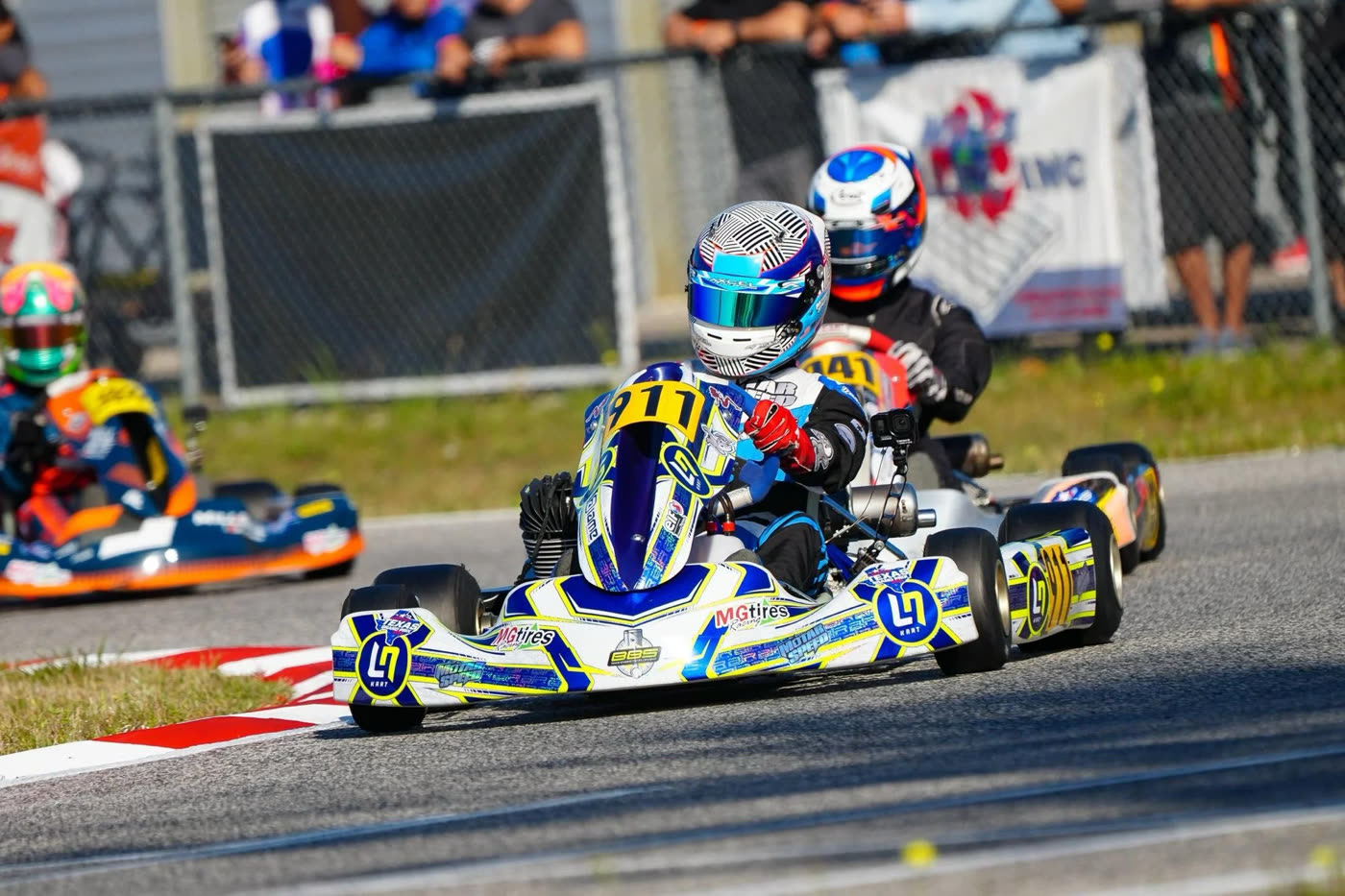
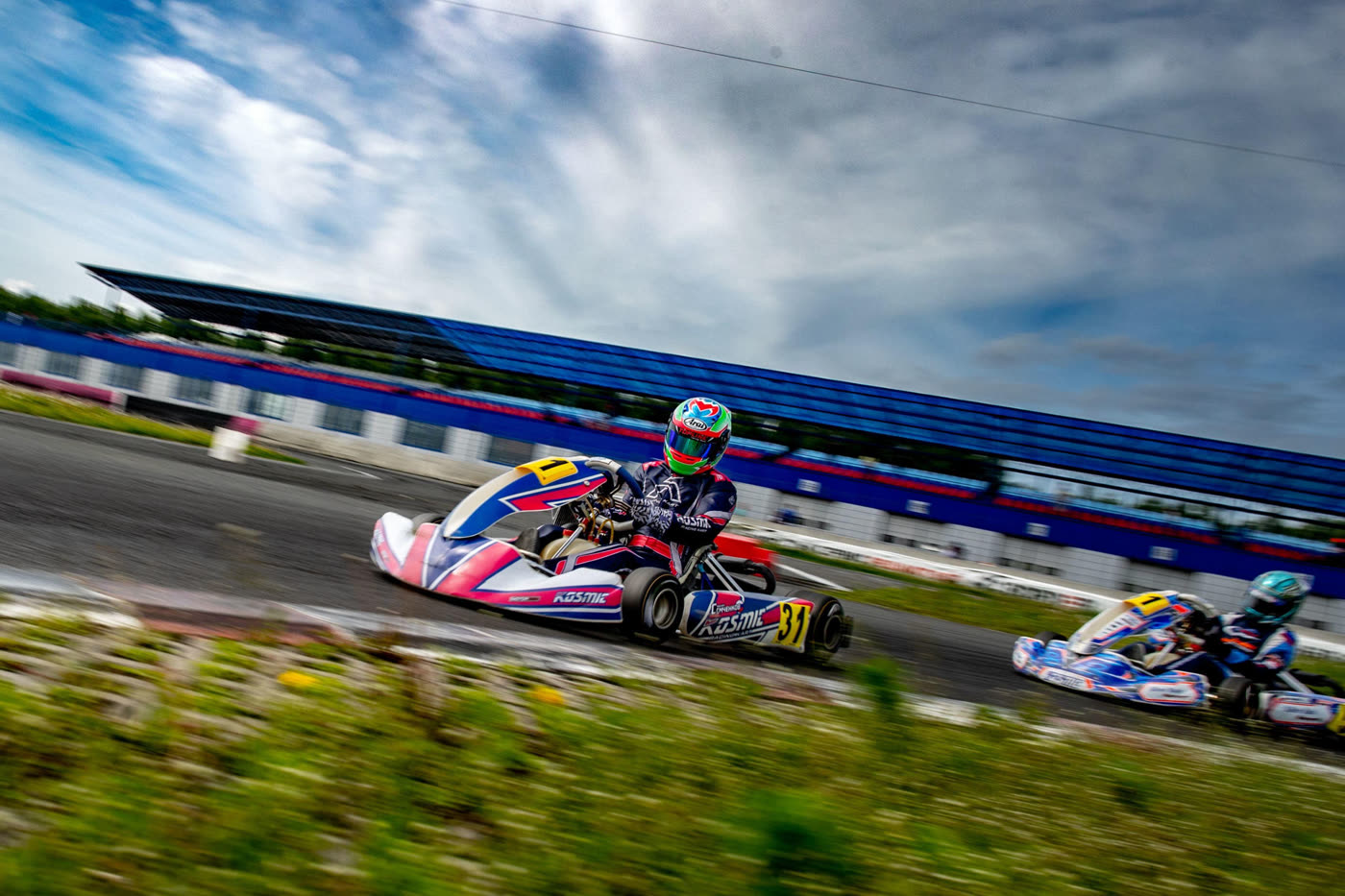
GridHeat and KartHeat bring the full
SmartControl platform to car and kart paddocks — every wheel its own measured channel, front and
rear sized to the axle. And like every warmer we build, each set is made to measure:
every tire size, motorcycle or car, front or rear.
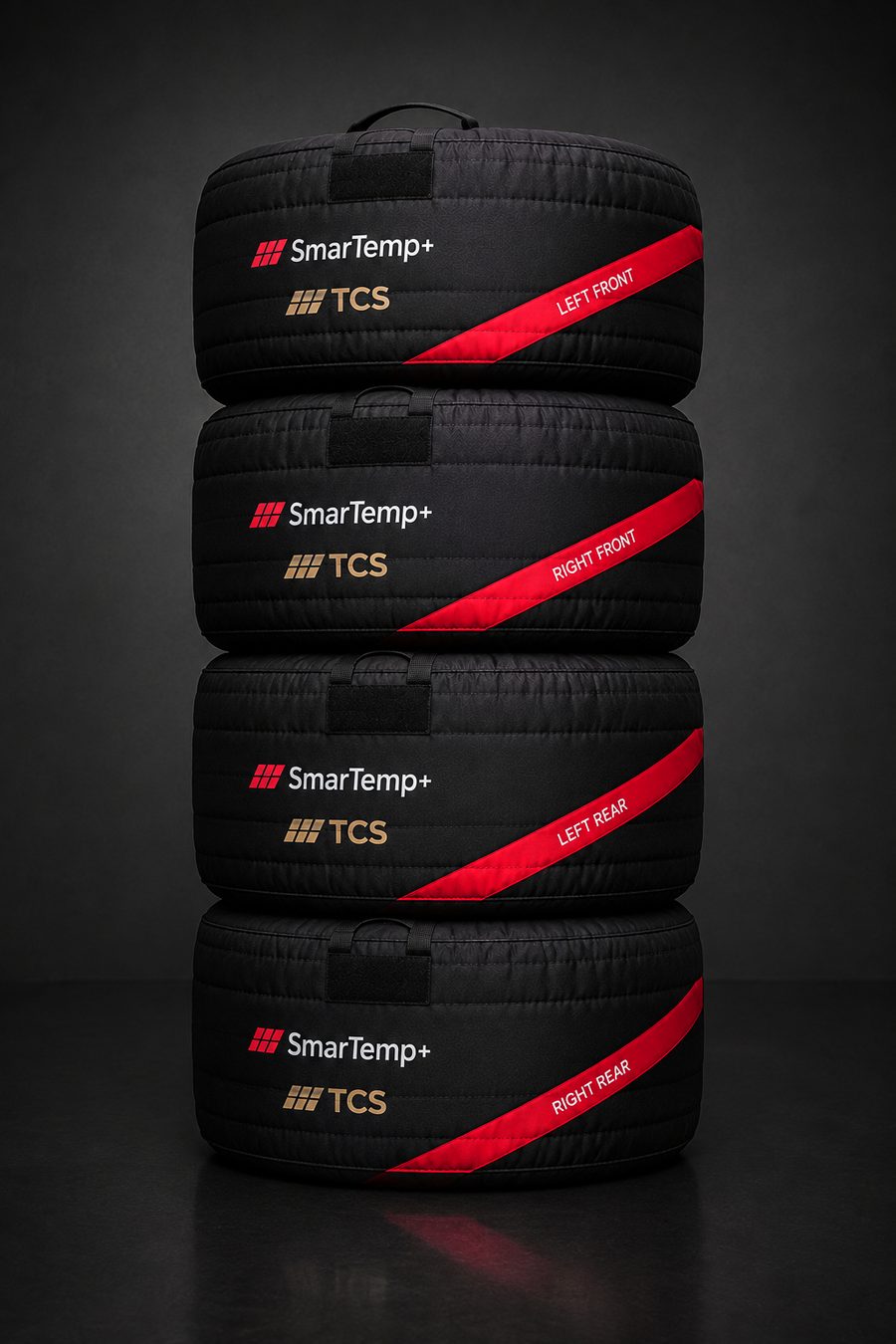
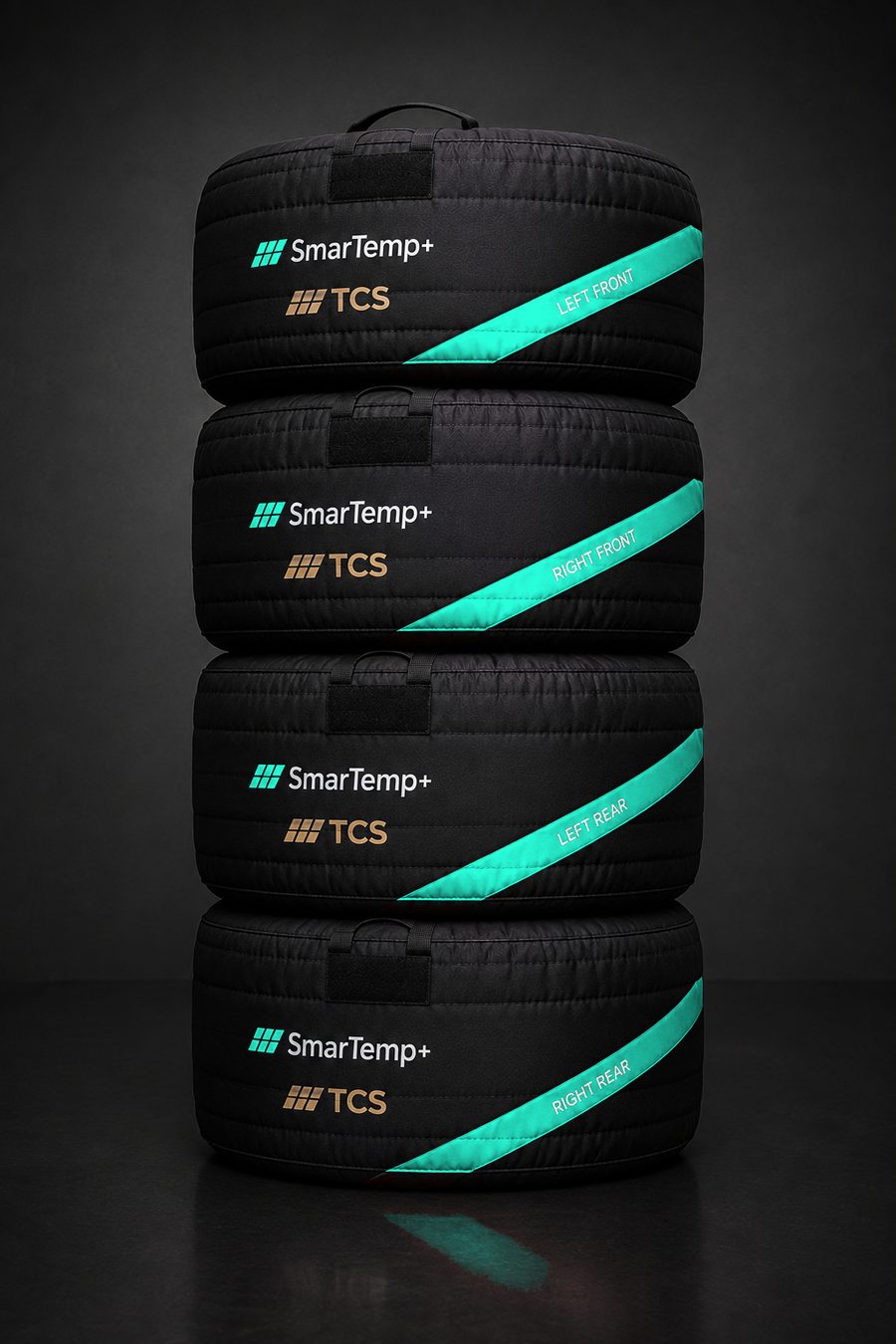
UNDER THE LIGHTS · THE WINDOW IS EVERYTHING · FOUR CORNERS, ONE BRAINGRIDHEAT · FOUR-CORNER STACK · PADDOCK-READY IN EVERY GRID COLOR · NO BADGE REQUIRED
KARTHEAT · KART SET · SAME PLATFORM, KART-SIZED · MADE FOR EVERY TIRE SIZE · YOUR STRIPE, YOUR COLORNIGHT SESSION · THE GRID WAITS FOR HEAT
Every other warmer shows you a number. SmarTemp shows you your tire.
Plug it in and heat it up. That's been the tire warmer story for as long as there's been one.
Yet it's the last thing that touches your tire before your tire touches the track.
The data, the heat, the pressure, the compound — everything that keeps a motorcycle
or car on track — left to a basic heating pad with virtually no engineering.
TCS found that unacceptable. So we did something about it.
Smoothly dials power — only what's needed, moment to moment.
Bang on / bang off — overshoots, then sags.
A separate heat sensor on every tire — real numbers, never blended.
One crude temperature, no real feedback.
Knows it's at target and shows you — on the controller, live.
Guesses — you never truly know it's ready.
Saves it all — temps, cycles, sessions. Saving on the controller ships at launch; the compare-and-learn features arrive with the ThermoLogic app.
Forgets everything the moment you unplug.
SmartControl refuses to be careless.
SmartControl boots off.
SmartControl won't heat without a valid sensor.
SmartControl carries a hard over-temp cutoff and catches a stuck relay.
SmartControl will not quietly cook a tire — or itself — while your back is turned.
We started at the finish line. A “Fresh Lap” approach. Here is the honest architecture:
the tire warmer itself is “dumb” — it’s just a blanket with a heating element.
At least, that’s what everyone has been led to believe.
We found the story that no one knew was there. The heat cycle is a data-rich information tool
that feeds decisions. We capture it in each heating cycle with the
SmartController so you can know internal, external,
pressure, heat cycle time, compound type… as much information as possible to allow a team,
rider, or crew chief to make an informed decision about how to condition and maximize grip and tire life.
“I’m running Pirelli — what are my pressures supposed to be? I’m running Dunlop —
what’s my number? Michelin?” Everyone has a number. But which number is it —
cold or hot? Off the warmer, or off the track? Hot PSI, or cold PSI?
01 · Select your tireThe baseline temperatures and pressures are preloaded.
02 · Select your targetYour pressure, your window — SmartControl does the work.
03 · Verify on arrivalIt tells you when the tire gets there. You confirm the target.
Will it always land exactly on the money? Absolutely not — ambient, compound, track surface:
too many variables move the number. Will you be in range? Yes. The performance window is the
target — and that’s exactly where SmartControl puts you.
We spoke with every tire manufacturer you know — and some you’ve never heard of. We compiled
the data from our experience in every paddock, from Formula One and MotoGP right down to your local
track day. The tire conditioning preloads in the
SmartController get every rider and every tire into
their performance window. Fine-tune your own preferences and create your own tire conditioning
profile — we just want to help you get started.
Heat-cycle data · the warmer that became a dataset
Every heat cycle generates data. The platform houses and controls it.
Every cycle those warmers run writes a record — soak, peak, faults, cal-cycles, the whole session.
The ThermoLogic platform is where that data lives:
housed, owned by your team, exportable, and turned into decisions. The operator console and team portal
run today; the compare-and-learn features for riders arrive with the ThermoLogic app.
In every industry, data and cycles drive the decisions. Motorsport is no different.
Where the tire started, where the heat went, where it ended, what it touched, what it means —
all of it driven by data. Every cycle is tracked, logged, and compared, building a dataset
you can rely on: this compound, this track, this rider, this day. Not just the tread —
the rim is its own channel on every tire, tracked and logged beside it, because a tire's
heat lives in both. And because temperature never travels alone, pressure rides with it —
heat, rim, and pressure logged together, so you see how each one moves the others. The tenth you found in turn one lives somewhere in that
record. Now you can find it again.
01 · MeasureA probe on every tire. The controller reads the real number, live.
02 · RecordEvery cycle logged on the controller — nothing forgotten at unplug.
03 · HouseSessions land in the ThermoLogic cloud, owned by your team, exportable.
04 · DecideLive walls, cycle compares, alerts — the data argues, you decide.
Knowledge → Confidence.
SURFACE HEAT
RIM · CARCASS
PRESSURE
SUPER SLOW MOTION · DOTS TRACK THE TIRE · LIVE TO CLOUD
LIVE
FOUR-CORNER PIT VIEW · CONCEPT · FL · FR · RL · RR — EVERY WHEEL, EVERY SET, LIVE ON THE WALL
LIVE
CYCLE OVERLAY COMPARE · THIS CYCLE VS YOUR AVERAGE, ±1σ BAND — SEE IT · SAVE IT · SETTLE IT
LIVE
IN YOUR POCKET · SAME PLATFORM, PHONE-SIZED —
INSTALLS FROM THE BROWSER, NO APP STORE
"Fifteen seconds, including the time it took to decide."
A conditioning profile, pushed from the other side of the world
Control, wherever you stand
Your tire, your spec.
Control your warmers remotely from your device or computer — or directly at the warmer.
Either way, the same brain is listening.
At the warmer
Hands-on, glove-friendly
Walk up and run it on the glass — set it, start it, watch it. Everything the platform can do starts with a controller you can touch.
From anywhere
Your device or computer
Monitor and control the same warmers from a phone at the pit wall or a laptop across the world. The screen in your pocket is the screen on the warmer.
Your spec
It remembers you
Create your own tire conditioning specification for your riding and your preferred compound. The SmartController remembers your settings and conditions your tire to your preference — every time.
Warm tires. Longer life. Fewer surprises. · dual-channel
Only the power your tire needs
Sips, doesn't guzzle.
Easy on the hookup
It only draws the power the tire needs to hold temp — not a flat 100% all day. Easy on a paddock hookup, a generator, or a battery. Less fuel burned warming tires, lighter footprint at the track.
Generator or battery — your call
The SmartSupply power source lets SmartControl run from either a gas generator or a rated battery power pack. And because the proportional hold sips only what's needed, a battery multiplies its tires per charge — silent, fumeless, generator-free when you want it. The RV-world's swap, brought to the paddock.
No more cooked rubber
Even, precise heat — no scorching hot-spots that bake the rubber. It eases off once it's there. That's where both the power savings and the gentle-on-rubber come from.
More days per set
With every session logged, you stop guessing when a tire is done. Squeeze every safe session out of it — fewer tires bought, real money saved.
"Three more track days from one set — a tire you didn't have to buy."
No generator droning · no jerry can · no fumes
Ready → Verified. Never Hope.Verified temp data in real time — "hoped for" never won a race. · TCS
Safety & performance
Built to heat. Built to be safe.
Your equipment is an investment — we understand that. It should run, heat, do its job,
and be safe while it does it — every session, for the life of the gear. Safety isn't a feature we added;
it's behavior declared before the first unit ships, with protections engineered to
virtually eliminate burns.
No sensor, no heat
If the sensor isn't on the tire, the warmer won't turn on. Period. No reading means no power — it never guesses.
It can't cook a tire
Every setpoint has a hard ceiling above it. Touch that ceiling and the channel shuts itself off. No override. No exceptions.
It never fails quietly
A stuck relay. A dead sensor. A channel acting strange. SmartControl catches it, shuts it down, and keeps it on the screen until you clear it.
Any power, anywhere
Plug into house power, a generator, or a battery station — anywhere in the world — and it just works. Smooth, even heat. No hot spots. Nothing working harder than it has to.
Warmer not heating to your targetIT ALERTS YOU
Power issueIT ALERTS YOU
Past target — tire at riskIT ALERTS YOU · SHUTS OFF IN THE DANGER ZONE
Power source having a problemIT ALERTS YOU
Generator running out of gasIT ALERTS YOU
The SmarTemp warmers are here to support you —
recreational track day or race day, from the weekend rider to premier-class factory teams and everything in between.
Engineered to UL safety standards — listing in process.
Safety behavior declared before the first unit ships
One controller runs every size below — and mounts portrait or landscape, whichever suits your setup.
1.85″
3.5″
7″
12.3″
15.6″
The product family
Every name is the same platform wearing a different job.
TCS sells thermal intelligence; tire warmers are the wedge. Controllers first, then the thermal products built on them.
// Control & display
Touchscreen controller
The flagship interface. Capacitive-touch glass over the ThermoLogic platform — set it, watch it, trust it.
Rotary controller
The same controller behind a physical dial and a compact screen. Built for gloved hands and glance-speed reading.
Idle display
What the screen shows when you're not touching it: the numbers that matter, readable from across the room.
// Tire & chassis heat
Single-channel tire warmer · standalone
One tire, one channel, no controller required. The simplest way into measured tire heat.
Single-channel tire warmer · SmartControl
The same warmer, run by SmartControl — measured, logged, and repeatable session after session.
Dual-channel tire warmer · premium
Two independent channels in one warmer — tread and carcass treated as the separate problems they are.
Four-corner car set
The four-corner set for car and open-wheel paddocks — every wheel its own measured channel, front and rear sized to the axle.
Four-corner kart set
The same platform at kart scale — four corners, one brain, sized to sprint and shifter rubber.
Active heated tire coverpowered by Lite
A cover that doesn't just hold heat in — it puts heat in, and holds the tire where you set it.
Battery fork warmerpowered by Lite
Suspension has an operating temperature too. Battery-powered warmth for forks, no paddock power needed.
// Buy once · upgrade forever
Start · SoloTempOne tire, one channel, warmers first — no controller required.
Add the brainAdd the digital controller later, and rim warmers when you're ready. Same warmers, now measured and logged — that's SmarTemp.
Step up · SmarTemp+Upgrade to dual-channel SmarTemp+ without buying a brand-new set of warmers.
The warmers are modular and upgradeable — they aren't just a family. Your SoloTemp can become its
big brother, and its oldest brother, just by upgrading. TCS wants every customer to have access
to the best, no matter where they start.
// Gear care
Gear / boot / glove dryer
Controlled warm airflow for the gear that came back wet. Dry by morning, every morning.
Suit dryer
The same treatment at suit scale — leather and liners dried gently enough to do it every day.
Raised in motorsport. A lifetime holding temperature.
Proven elsewhere first
Aerospace. Space. Healthcare. Foods.
Industries where a missed degree ruins the batch — or the mission. That's where these controls, heating elements, and datasets grew up and proved themselves.
The gap we saw
The paddock still guesses
Every other thermal industry learned to measure. Tire warming never did — until now.
Now here
Same system. New job.
Same controls. Same elements. Same datasets. Now conditioning tires — brought by people who grew up in the paddock.
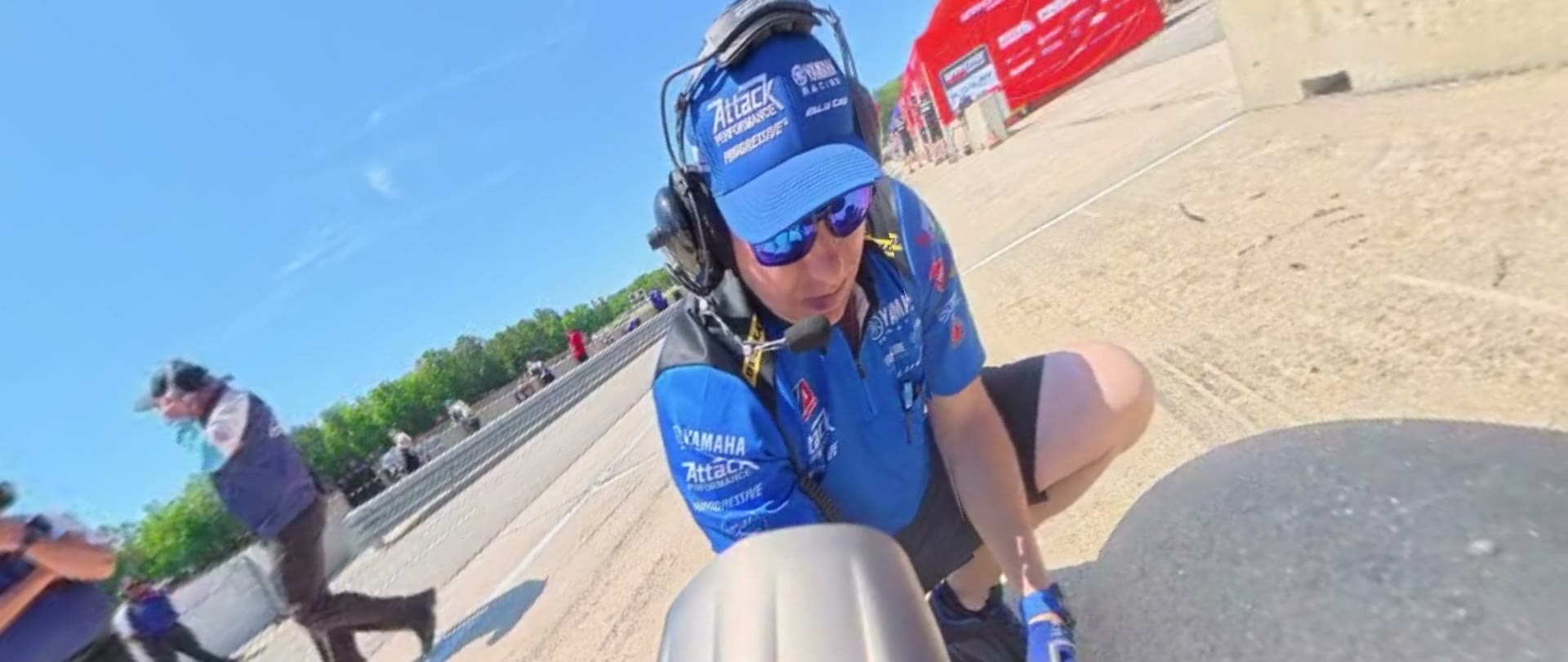
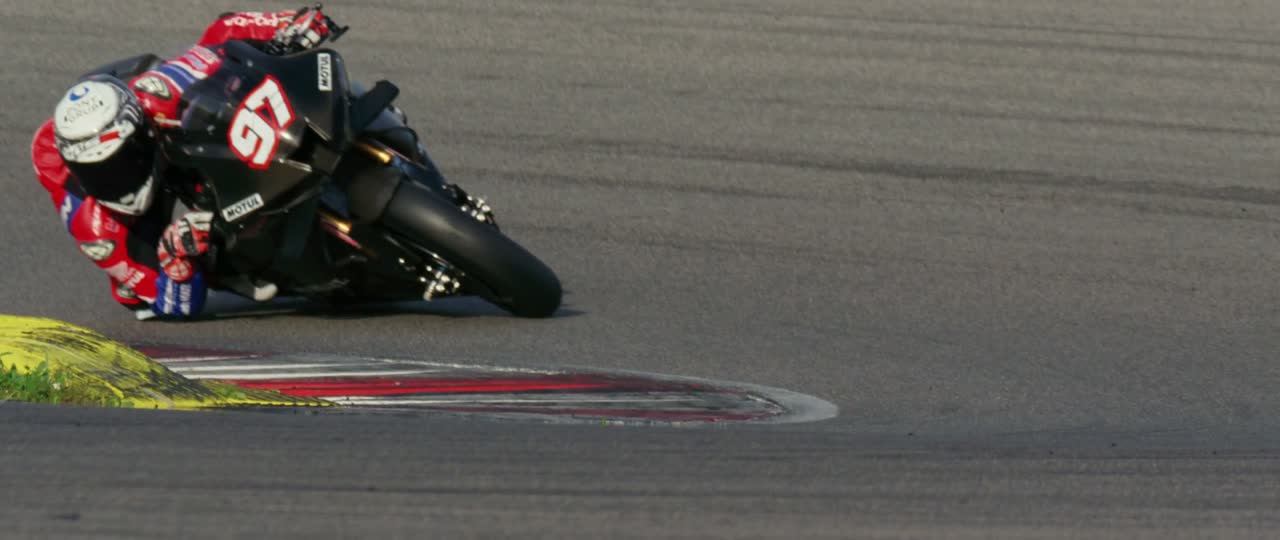
We don't watch this paddock from a distance — we're in it. TCS is a proud direct sponsor of
Attack Performance, Josh Hayes,
Melissa Paris and MP13 Racing, and Orange Cat Racing in MotoAmerica.
"If you've not heard of us, that's intentional. TCS is a small company that supports many
industries behind the scenes — quietly producing the best thermal products in demanding
industries. That's our focus."
Thermal Control Systems
For manufacturers
The thermal control platform is already done.
If you build a product that heats, cools, or holds a temperature, the SmartControl platform is designed to drop into it.
One controller module covers your entire product line — from a 1.85″ readout on an entry model
to a 15″ panel on the flagship — with the interface adapting to each display automatically.
Underneath, ThermoLogic supplies the control behavior: setpoints held to spec,
safety limits declared before the first unit ships, and the same firmware discipline we run across eight industries.
You design the product; we bring the brain and the glass.
Every tire arrives at — and stays in — its performance window. Ready when you roll out.SmartControl checks every tire against its window 120 times a minute — measured at the tire, never guessed, and logged for the debrief.TCS · · ·
Riders & writers
See it. Save it. Settle it.
Everything on this page runs on the TCS engineering bench today. If you want the longer story — how the firmware thinks,
what the deployments look like, where the numbers come from — the main site tells it in full.
“TCS has been quietly working behind the scenes to bring better technology, products,
and safety to teams and riders.”
Thermal Control Systems
 · powered by
 · TCS
· TCS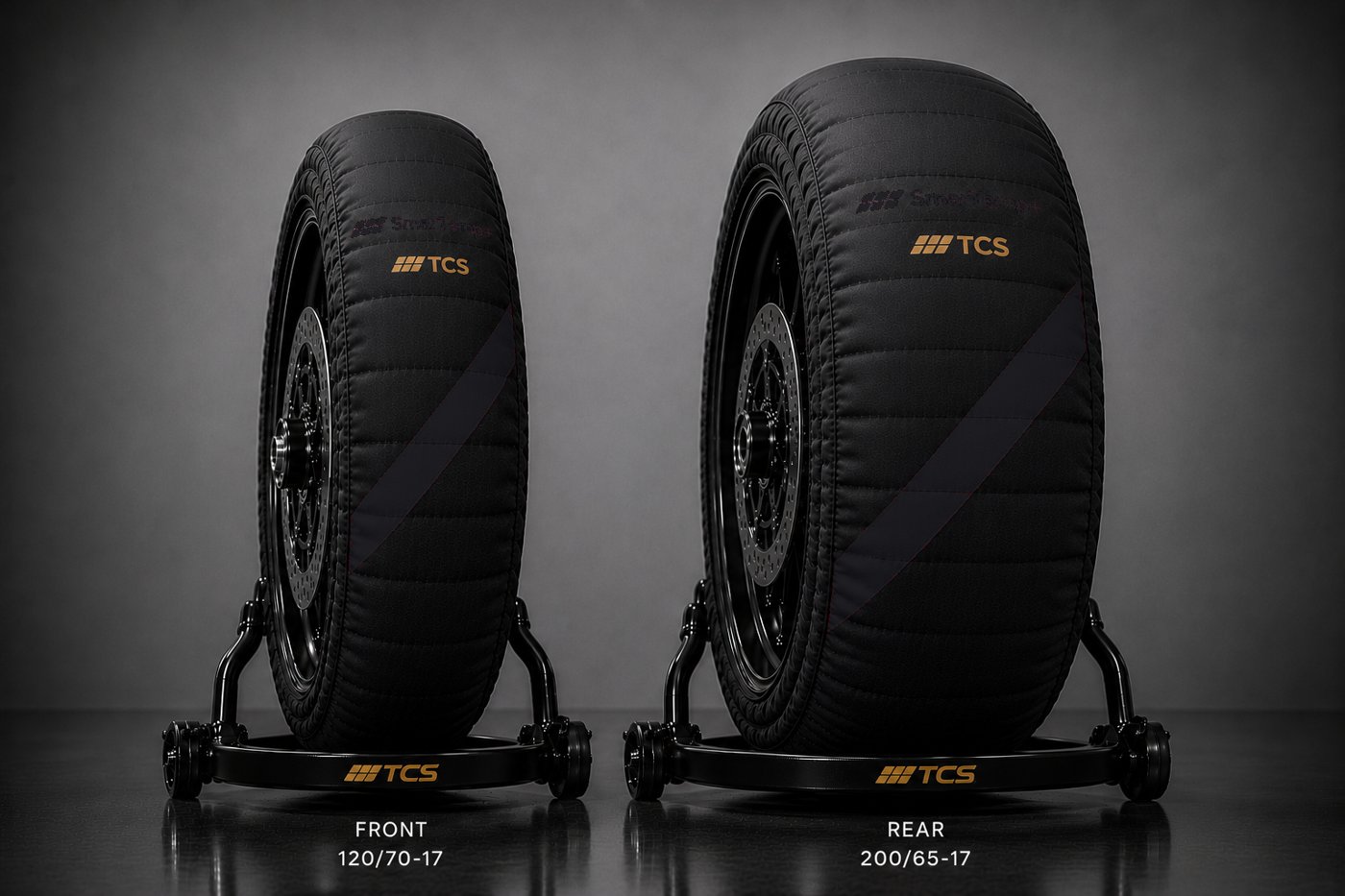
 Lite
Lite




 · dual-channel